Wednesday, September 30, 2015

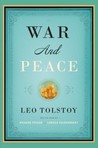
Review: War and Peace

War and Peace War and Peace by Leo Tolstoy
My rating: 3 of 5 stars

Epic. But maybe a little too epic. I’d take Tolstoy’s advice here and not expect a novel if you ever get around to reading this huge tome, because it definitely stretches the definition of “novel” a bit. Anna Karenina is more conventional and straightforward to follow compared to this and is probably a better introduction to his writing style if you’re not ready to invest the time in this sink. (and that's ironic because Anna Karenina is also really long hah...)

That said, W+P is surprisingly not that difficult to read considering its length- well, compared with other similarly regarded lengthy epics like Ulysses anyway. The only real major impediments here are the large amounts of untranslated French (that is, if you’re reading a version that only includes the translations as footnotes like Pevear+Volokhonsky and aren’t fluent in French; you can make an argument for/against not translating the French, but at the end of the day it’s still a hassle to deal with the translation footnotes, let alone the actual historical footnotes) and the chapter-long philosophical digressions that become increasingly common towards the end of the book. The digressions themselves actually aren’t irrelevant to the narrative, even though they sometimes can feel that way; they try to focus instead on the greater subjects that inspired the telling of this story to begin with: topics like the functional differences between art and history when they overlap, what the human experience in war and peace reveals about the meaning of life, the power/lack thereof of rulers in light of history, why historians suck at their job (seriously), and so on.

It's all definitely worth contemplating in light of the actual story being told… but also rather tiring to read through at times, especially in the second epilogue where it's just nonstop philosophizing/pseudo-philosophizing for all I care (and I wasn't really impressed with the scientific analogies, but that's probably a sign of how the times have changed since this book was written). If this were a true novel, you’d expect the main fictional-historical narrative to speak these things for themselves, but no, Tolstoy just had to get in your face about them because of course these subjects matter, right? It almost feels like listening to a friend who rambles about politics because they just can't get over their obsession with it- of course politics matters (in that it affects how we all live directly/indirectly), but it's not something I want to hear or talk about to the point where I just vomit politics everyday for the rest of my waking life.

Regarding the actual story and its themes themselves, it comes off surprisingly relevant for a 19th century work centered on a period during the high point of the Romantic era (not that Romanticism is irrelevant by any means… but you get the picture). A lot of the emotions, moments, and experiences conveyed here seem almost prescient of notions I’d considered modern/20th century (like the apparent meaninglessness of war- I mean in the All Quiet on the Western Front / WWI sense), and there were definitely moments where I thought I’ve felt this before and then oh my god I’M PIERRE BEZUKHOV. Just Tolstoy being on point in expressing our thoughts and feelings before we even knew how to describe them (let alone were born to experience them) as always.

The pacing of course is slow/gradual, and it takes more than one-to-two hundred pages for the plot to feel like it’s going anywhere- unsurprisingly so given the number of focal characters there are to follow; even though Pierre, Andrei, and Natasha are often touted as the “main” characters, enough other characters get attention from the narrator (particularly Nikolai and Kutuzov/Napoleon to a lesser extent) that you start to realize this book is really less about the individual characters than it is about something much bigger and encompassing all of them. But it’s also interesting how much more lifelike the fictional characters are compared with their nonfictional costars, most of whom I wouldn’t have been able to tell otherwise given my lack of knowledge of this particular era of history if not for how much more boring it was to read about them, haha... Even the initially intimidating figure of Napoleon comes off as underwhelming and smaller-than-life the more he appears, albeit purposely so (since the unpredictable motion of history dwarfs the wills of "larger-than-life" individuals and so on).

In hindsight, I feel like the less consistently interesting parts of this book tended to distract or almost overshadow the better parts. One of the best things about W+P is its account of how individuals experience war in contrast with life outside of war; for his time, Tolstoy was probably unprecedented in his ability to capture such a feeling so succinctly- but with the amount of other material also crammed into this book, it was easy for me to lose sight of those moments after they had passed, especially towards the end.

All-in-all, definitely worth reading if you can get through it, but not an absolutely essential must-read rec if you value the limited time you have on earth, because for the extreme length of this book, it wasn't entirely life-changing or inspiring the way I've felt about other classics in the past, even though it did have its awe-inducing moments. Okay sorry, that might've come out a bit more morbid and sardonic than I meant it to sound. (But I kinda mean it. If it weren't for the fact that it was "only ~40 pages," I'd have probably passed on the second epilogue. I mean who writes second epilogues-let-alone-epilogues these days anyway??)

Tuesday, September 29, 2015

Review: Perdido Street Station

Perdido Street Station Perdido Street Station by China MiƩville
My rating: 5 of 5 stars

I remember a long time ago, the first time I read through the 3rd and 4th Harry Potter books, being really afraid of dementors, particularly after a certain scene in the 4th book that made me realize what they were capable of.

This book basically took that same fear impulse and elevated it to a level I didn't know was possible. It wasn't so much a particular scene at first (the one that makes you realize, "oh crap things are getting real now"), as it was processing the explanation that came after the fact of what had just happened, that made me do a double-take and suddenly grow deathly terrified of whatever was going on in this book. And it just grew worse from there.

They might as well straight up call this fantasy-horror, although the New Weird fits perfectly well too as it's plenty just straight up weird. The setting is much stranger than the generic Tolkien-esque or even modern day fantasy you might be used to- it hit me about ten pages in when I realized the main character was in love with an anthropomorphic scarab beetle. I think the most apt comparison would be some unholy mixture of Lovecraftian horror and steampunk, and I'm also reminded of the Planescape campaign setting, but it's unique enough outside of those influences such that I wouldn't limit it to those descriptors.

The story takes a while to pick up; the first 20% is really just acclimating you to the strangeness of this new world, and the premise seems just like a decent excuse to introduce the setting before the real plot takes over. But once it does, the city itself starts to open up in layers unseen, and you realize that it's really more about New Crobuzon than anything else, because the setting really is that fascinating (if not also terrifying).

If anything, this book makes me realize that I need to read more Weird stuff, because I just can't get enough of it (although I probably should've figured that by now after Planescape: Torment).

Sunday, September 27, 2015

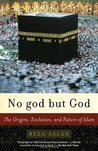
Review: No god but God: The Origins, Evolution and Future of Islam

No god but God: The Origins, Evolution and Future of Islam No god but God: The Origins, Evolution and Future of Islam by Reza Aslan
My rating: 4 of 5 stars

A fascinating and relatively accessible intro for anyone unfamiliar with the history of Islam, although given my lack of familiarity with the subject, I'd be interested in hearing what other contemporary Muslims think, since I sometimes got the impression that Aslan's underlying opinions weren't the norm. The bias here can be a little noticeable at times, but for a reader new to the subject, it's still worthwhile.

The book covers the historical context in which Muhammad grew up, a general overview of his life, and the events following his death that led to the formation of the major branches of Islam. It also occasionally jumps around to how the history is linked to topics more relevant to the present day, including: leading female thinkers, the 1979 Iranian Revolution, a full chapter on Sufism (that to be honest didn't quite feel like it fit in with the rest of the book), the rise of the Wahhabi movement (read: important for understanding Saudi Arabia and associated terrorist orgs like Al-Qaeda, the Taliban, and most recently ISIS/IS) and the effects of European colonialism on the Middle East, among others, before finally commenting on Islam's potential future and why attempts at democracy in its native countries have failed in the past. That argument is a cautiously optimistic one, but as he points out, the war to decide Islam's future is currently being fought today in the Middle East and beyond.

Aslan's approach to the historical side of things reads almost like a novel in itself- in fact I kept wondering about his sources until reaching the notes in the back- and he makes a good point about emphasizing the difference between genuine, or objective history vs. sacred history, or the actual stories that the religion is concerned with, as it is the meanings taken from these stories and how they have affected future generations that matter more for our understanding in the present-day rather than whether or not they actually happened.

His explanation of the difficulties that the early Muslim community or Ummah faced in the immediate aftermath of Muhammad's death is especially enlightening and helpful for understanding why the various sects, Sunni, Shia, etc. turned out the way they did, and the author is apt to point out that many of the practices and rituals that the varying sects of Islam have today were not formalized until this decisive period. Aslan also isn't afraid to provide criticism on the potential flaws and weaknesses in each of the topics he addresses either, such as how the creation of hadiths about the Prophet's life were often misused to support a later contemporary belief centuries later, or how a rigid traditionalist interpretation of the Qur'an being uncreated (which among other things considers it pointless to study its historical context) contributed to the stagnation of independent Islamic thought up to the present day.

Coming from a Christian background, the course of reading this book made me realize that no matter what you believe, the birth and evolution of a religion is often a harrowing ordeal, especially for its leaders. For Muhammad and all of his successors, the early Caliphs and especially the family of the Prophet, I couldn't help but sympathize with their plights as I read about the issues that they struggled with, all of the internal politics that erupted and the betrayals and the violence that came about while they still strived to recreate the ideal community they had at Medina, each in their own vision. I don't know if the Prophet himself could have imagined what his Ummah would turn into, centuries later, although of course some would insist otherwise. But considering what the Sunni-Shia relationship has turned into today, it feels all the more tragic... though at the same time, there is much to admire from the efforts of those who've still persevered for a better future.

It's a lot to digest in only ~300 pages for a topic that could easily have spanned an entire textbook and then some, but at least for now, I feel like I have enough passing familiarity with the names and terminology so that the Wikipedia article series on Islam doesn't look so daunting anymore, haha. (But to be more serious, it does help with novels that reference the history of Islam, like Salman Rushdie's The Satanic Verses, which I had a lot of trouble understanding before.)

Friday, September 11, 2015

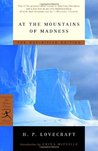
Review: At the Mountains of Madness

At the Mountains of Madness At the Mountains of Madness by H.P. Lovecraft
My rating: 2 of 5 stars

Interesting ideas and concepts, but poor execution.

Lovecraft is typically known for the eponymous genre he inspired, Lovecraftian horror (see also Cthulhu, games inspired by this genre like Amnesia and Eternal Darkness, Arkham Horror, and anything else that references Arkham or Eldritch or the Necronomicon that isn't Batman). But ironically this novella, apparently one of his better known works, isn't very terrifying aside from maybe parts of the last ten pages... and even then I had to go back and reread a section to feel remotely scared because I didn't catch it the first time.

The main problem with this story is the excessive exposition that takes place for the first 100+ pages or so. Not to say that it's all entirely bad by any means; for Lovecraftian enthusiasts, or open-minded role-playing game masters looking for ideas, or anyone who just likes immaculately detailed fictional universes, this will float right up their alley, because Lovecraft has quite the imagination. But the thing is, the defining aspect of Lovecraftian horror that effectively makes it... well, horror, is its emphasis on the fear of the unknown and the unknowable. It's effective because it takes advantage of our imagination to fill in the gaps, and our minds are really just that good at scaring ourselves.

But in this case, Lovecraft spends a good amount of time describing in much intricate detail the entire history of the species of the main otherworldly creatures featured in this story: their origins, their biology, their relationship with other earth and alien species, their placement in the geological timeline of Earth's past, and many other details that the narrator somehow magically is able to translate from these archaeological hieroglyphics he's just discovered for the first time, written in a language he's never seen before and has only hours to decipher, before... something predictably bad happens. (I mean, really? Do you know how hard it is for archaeologists today to interpret and even agree on excavations that have existed for decades??)

It really broke the suspension of disbelief to go through so many pages of this- and then finally come back to the original premise, by which point I was in no position to be scared of anything anymore because so much of the mystery had been dispensed with for no apparent reason other than to stroke Lovecraft's overactive imagination, ego, what have you. It's sad, because this story had so much potential, especially the setting (which has been fantastically revisited in the more recent past by another title you may be more familiar with, The Thing).

Even up until the infodump happened, it at least seemed like it was heading in a direction similar to other Lovecraftian stories that I'd had better experiences with- the premise had promise, the setup set up, the monsters mythified- and okay, I've written enough words and tacky alliterations about this novella-that-should've-been-a-short-story for one day. Read other Lovecraft stories (Call of Cthulu, Colour Out of Space, Shadow Over Innsmouth, Dunwich Horror, etc.) if you want to get a better sense of what his kind of horror is like, but only go for this one if you're can't get enough and are still hungry for more of his universe. Lovecraft can be pretty fun, but realism (and brevity) isn't exactly one of his strong points, and it shows here.