Monday, July 9, 2018

Review: Disgrace

Disgrace Disgrace by J.M. Coetzee
My rating: 4 of 5 stars

What started out as the South African Lolita turned into a surprisingly interesting take on shame, personal violence, and changing race/power dynamics in a faraway place but not unlike home. I wish I had more context to go off of for South African history because I feel that it would enrich the experience of this book a lot more, even though I think enough context is provided to get the gist of what some of the main issues are.

Just note to avoid if you're uncomfortable with violence against dogs (although quite frankly, there's A LOT here that ought to make you uncomfortable. but the dog stuff is probably the most graphic prose-wise.)

Wednesday, July 4, 2018

Review: Americanah

Americanah Americanah by Chimamanda Ngozi Adichie
My rating: 4 of 5 stars

An affecting love story at heart (and speaking of which, I really liked the ending monologue), but I think what this book gets most attention for is the observations and articles on American race relations written by the main character, a Nigerian immigrant who spends the better part of a decade adapting to life in America before moving back home. I'll admit at times that I thought these observations felt a little disjoint from the main plot thread (that is, the love story), but they're definitely a major component of this book, so they're worth addressing as part of the main product anyway.

To be honest, it feels weird reading this after the 2016 election, because looking at the way things are now, I feel like the people who would benefit the most from reading this are also the least likely to be receptive to the attitudes expressed in this book. I think it appeals really well to people like myself who are already inclined to be receptive to its messages-- but I mean honestly, a lot of the 'lessons about race for non-black Americans' have started to become 'common sense' for us the past few years, so a lot of this was basically regurgitating things I already knew, but at least done so in an easy to digest format and it's always useful to have that.

But others may well take issue with the attitude Ifemelu takes when she expresses these views, in a way that almost can feel condescending and judgmental to someone who doesn't already know or agree with these things. This was much moreso the case with her blog articles (randomly scattered throughout the book), but even in regular character interactions in the second half, there were moments where I had trouble accepting the conclusions Ifemelu herself would draw about people when she realized she didn't like them. Like, something in this scene didn't quite follow logically for me, and I feel like I'm missing a subtle undercurrent here from one or both sides, and did these characters even fully deserve the treatment that they got from her in return?

Well okay, maybe some of them did. But still, there were literally scenes that I had to re-read multiple times to get to that point, and it made me wonder how much effort others would be willing to expend, and moreover how much effort can we reasonably expect people to expend to understand each other when we're all frustrated at the same time. How do you effectively convey to another person whose American experience is so different from yours the magnitude and reality of that difference? How do you expect them to even be able to understand something they haven't experienced themselves?

But it's good to remember that not all of us have the luxury of time and convenience to even be able to think about how "well" we can explain this when black Americans in this country have had to deal with it far longer than many of us have even realized it existed. At the least, I appreciate this book for trying to start somewhere, with its own unique perspective at that. And it's not a bad place to start.

Monday, July 2, 2018

Review: The Adventures of Sherlock Holmes

The Adventures of Sherlock Holmes The Adventures of Sherlock Holmes by Arthur Conan Doyle
My rating: 3 of 5 stars

I've been realizing lately that most of my interest in Sherlock Holmes stems from shows/games/films inspired by the original more than the thing itself (similar to how I feel about cyberpunk).

Which isn't to say that the Doyle's original stories are bad by any means; I just don't feel like they've entirely aged as well as recent media would otherwise fool me into thinking they have. A lot of the deductions in these stories tend to rely on stereotypical cultural assumptions (granted, it's the 1890's); a few of the story endings feel wrapped too quickly or otherwise unsatisfying (I'm looking at you, Five Orange Pips); and oftentimes, information is concealed from the reader in such a way as to not make me feel entirely content even after reading Holmes' solutions to these problems.

A lot of the appeal of mystery stories lies in realizing clues missed in plain sight, or at least feeling like all the clues you need to solve the mystery are there before the detective gives away the solution; it's the same feeling you get from trying to solve a puzzle. Remove that factor and it's just not as fun anymore. But this is really a formula that wasn't perfected imo until the likes of Agatha Christie, Dorothy Sayers, and others came around, so it's hard to blame Doyle for doing something that's otherwise still pretty good for its time.

That said, a few of the stories in this collection stand out for effectively capturing all the things I like about Holmes and everything he's inspired, including: Scandal in Bohemia, Boscombe Valley, Copper Beeches, and Speckled Band, the latter being apparently Doyle's favorite here. The spirit of adventure, Watson and Holmes bantering, not-always-predictable mysteries with some surprising revelations, late 19th century British mannerisms, all of it's still here as strongly as ever.

And honestly, it's just fun to inhabit this world again-- or for the first time technically since I hadn't read these before? This is why I usually prefer to start with the original first lol.

Tuesday, April 24, 2018

Review: A Higher Loyalty: Truth, Lies, and Leadership

A Higher Loyalty: Truth, Lies, and Leadership A Higher Loyalty: Truth, Lies, and Leadership by James Comey
My rating: 3 of 5 stars

Not a whole lot of new stuff if you've already been following Comey's story in the news for a while or even his interviews with the media more recently. The main takeaways here are his thoughts on the qualities of good leadership, and how Trump basically fails to exemplify any of them.

Emphasis on Trump, because even though the book doesn't really address Trump's presidency at all until the last couple of chapters or so, everything up until that point is pretty much building up to Trump in some way, almost as if Comey's entire life story was fated to lead up to their confrontation. I imagine most memoirs (or rather, most people's lives) aren't designed or written in such a single-minded way, which puts this one in a bit of an awkward position. But as Comey himself has mentioned in interviews, there were plenty of other significant parts of his life that he didn't include in the book, presumably in order to focus the message better.

Personally, I'm inclined to agree with the general substance of his message, even though I find its execution to be a little forced, and it doesn't help that his actions naturally invite critics to make big fusses about an apparent overinflated sense of ego, in which he sees himself above the law and its institutions when things don't go his way. I'll admit, his actions in the past couple of years do seem puzzling and difficult to reconcile with his self-professed respect for institutional procedures and norms when it comes to the FBI/Justice Dept and their place within American government. And I think it takes a certain amount of "ego" to be willing to write and then publish and then promote a book like this that goes so far to defend one's actions in the first place. But I get the sentiment behind it.

That said, I think it's important to note something that I think only comes up briefly towards the end, and feel should be emphasized a bit more: no true "norms" exist for the kinds of situations that Comey has had to face in the past two years. This is something that became more clear to me after getting to the part where he indirectly "leaks" his memos to the press: because, as he puts it, he didn't feel that he could trust the leadership of the Justice department in the current administration-- especially after being unable to make sense of any of reasons given for his firing, even including Trump's comment about relieving the pressure off of the Russia investigation. That doesn't necessarily excuse what he did, but it does at least explain (in a way that makes sense to me) why someone as apparently principled as Comey would go so far as to do something so seemingly the complete opposite of those principles. I mean, knowing his strong will and stubbornness, where else would you expect him to go?

Comey's story strikes me as an interesting example of what happens when you take a highly idealistic leader and force him into an untenable situation where his ideals come into conflict with the demands placed upon him. Typically in our... I guess post-post-modern world today, such a person either adapts to the situation, losing a part of his integrity in the process, or he doesn't survive past that point (incidentally, most fiction I've read that conveys the latter scenario ends in that character's death). In any other presidency or political environment, Comey likely would've ended his career with distinguished honors and been well regarded for his public service. But after being forced to confront the impossible task of somehow representing a non-partisan organization in an otherwise increasingly partisan world, and then forced to legally serve under a man whose value system was almost completely antithetical to his, Comey is now regarded as a flawed, troubling or even infuriating individual by people on both sides of the political spectrum. But exaggerated criticisms aside (I find it hard to agree with Chris Wallace calling this book 'bitchy'; it's nowhere near that level), some reader complaints do merit attention here.

To be fair, Comey doesn't fully exonerate himself in the telling of his own story, and I mean that moreso than I think he himself is willing to admit. There are parts that the more critical-minded among us will still continue to find baffling, like the nature of his communication with Loretta Lynch, given the revelation that Comey didn't confront Lynch at all about his misgivings with her behavior during the Clinton investigation. And some of what would be the strength or force of his narrative is undermined by the problematic notion that for all his concern about defending the integrity and image of the FBI, the unilateral nature of his actions and subsequent need to have to repeatedly explain them have actually in some sense weakened those things in the public's eye during the past two years. What does it say about our government institutions that it takes a former FBI chief acting completely outside normal protocol to force them to actually do their job?

A part of me wonders if the situation we're in now, with the special counsel's investigation now running at full speed with no end yet in sight (yet), was worth everything that's happened to get to this point. The idealist in me still doesn't entirely know. But the pragmatist in me leans towards yes. And I feel like the former is slowly dying with each day. And I'm not sure how I feel about that.

tl;dr: I like this book but I have mixed feelings because reality is complicated.

Tuesday, May 30, 2017

Review: Wolf Hall

Wolf Hall Wolf Hall by Hilary Mantel
My rating: 5 of 5 stars

One of those few novels where I’ve found myself wanting to instantly reshelve it under ‘to re-read” the moment I finished, because once just wasn’t enough. Like I feel like I kind of understand it, but at the same time there’s just too much to unpack and keep track of throughout that it wasn’t really possible for me to feel satisfied after one run-through-- even though I probably made it worse by splitting it across a couple of months. And I still have to read the sequel (where things really start to go down) first.

Anyway, I’ve already found myself in the odd position of having to defend what exactly it is that makes this book interesting to me twice (-__-), because whatever words first come to mind don’t really do this book justice, so this may come across as a bit more of a sales pitch than usual— except that I’m not really good at sales pitches, nor do I really know how to make one, and my writing style tends to messily digress a lot when it comes to this kind of stuff so please bear with me while I dress up this entire review with loads of historical context.

Wolf Hall basically covers a time period that some people (usually female friends in my experience) may be familiar with from the likes of the TV show The Tudors, or that Natalie Portman film The Other Boleyn Girl. Or to those who bothered paying attention in European history class, that time when the king of England (Henry VIII) decided that he was done with his wife of 20-something years and wanted to divorce her... only for that to result in the creation of the brand new church of England (aka the Anglican church, from whose depths spawned the likes of C.S. Lewis and N.T. Wright) because the Catholic church didn’t allow for divorces and Henry decided he was better than the Pope so “why not make my own church!”

Cue five more wives (divorced, beheaded, died, divorced, beheaded, survived) followed by Queen Elizabeth I, and that’s my Cliff Notes summary of the terrible, no good, very bad reign of Henry VIII for you. (I also forgot to mention that he had a reputation for being fat... not that you'd know it after seeing how sexy he is in the Tudors.)

So if you didn’t realize it by now, this time period’s been covered fairly thoroughly by other authors already (the most popular being Phillipa Gregory and Alison Weir), so why read yet another book about Henry VIII?

Well to be honest, this book isn’t really about Henry (who doesn’t show up for maybe… 50 pages?) so much as it is about his chief minister, Thomas Cromwell*, or the guy who helped Henry politically orchestrate the whole divorce-remarry-and-found-a-new-religion business and therefore established himself as the coming of the Antichrist in the flesh according to some conservative folks of his day.

(*Not to be confused with BBC’s #10 greatest Briton of all time/regicidal dictator Oliver Cromwell, although the two actually were related through Thomas’s nephew Richard Williams, who is also in this book but decided to change his last name to Cromwell later in life because I guess he loved his uncle so much.)

Even to this day, Thomas (who I’m referring to by first name to not confuse him with Oliver... but will now refer to as Cromwell because of all the other freaking Thomas’s in this book ugh) has a bad reputation, especially when compared with the likes of his arch-nemesis, Stephen Gardiner-- I mean his other arch-nemesis, Thomas More. (Yes, for those of you who took European history, that Thomas More. And now that I think about it oh my god it’s A.Ham vs A.Burr all over again). More was a staunch defender of Catholicism in England in his day, which lends him credence to modern-day Catholics and even made him the righteous subject of a notable 1960’s award-winning film, A Man for All Seasons— which showcased Cromwell as more of a ruthless self-serving villain and which Mantel ostensibly wrote this novel in response to.

The point being, it’s really easy to vilify Cromwell on the basis of what he did (you know… allowing Henry’s selfish whims to virtually flip the entire fabric of Christianity overnight the way Jesus flipped tables) without really knowing anything about him as a person, so Mantel’s novel seeks to change that by placing him within the wider context of his life experiences and relationships and thoughts in such a way as to humanize him for the rest of us, framing his choices and decisions as practical responses to the issues he faced, who did what he had to do in an otherwise hostile political and religious climate. In contrast with More, Cromwell gets to the point of asking, to what extent is it worth defending or sacrificing your life over abstract religious ideas? Especially when the argument over those ideas becomes pedantic in nature.

I should note that humanizing Cromwell doesn’t completely exonerate him from what he did; this story is still at its heart in some way a decades-long Machiavellian revenge epic against More and everyone else who’s ever slighted Cromwell since the first days of his career (although given the way that they’re portrayed here, they kinda deserve it). That said, it’d be a revenge story that I personally find much more compelling than the Count of Monte Cristo, in part because it, well... kinda actually did happen in real life. And unlike the Count, you don’t actually see Cromwell obsessively brood over exactly what he is about to do to person X for a thousand-pages on end before he actually does anything. I mean, you’re technically in his day-to-day thoughts throughout the entire book as he’s conducting his business, but Mantel apparently doesn’t show you all of those thoughts, because sometimes he’ll do something that seems to come out of nowhere… until upon careful research you realize that this was actually foreshadowed 300 pages ago and holy shit he’s been fooling us for that long?!?

(Note: you don’t actually have to go back that many pages to realize some of this, but this novel really does seem to reward careful readers. Mantel does a great job of telling without actually telling and showing only when it counts.)

To be fair, it’s impossible to know what the real Cromwell himself really thought, which is why Wolf Hall really functions as a work of historical fiction rather than nonfiction, but it does read convincingly enough to make you feel as though this Cromwell is close enough to the real one. It’s clear that Mantel herself did a lot of research in making this; there’s a considerable amount of attention to historical detail and ensuring that certain figures are historically in the right place at the right time for all the right events to happen. What’s new here is mainly the attempt to fill in the gaps in the historical record and breathe life into it at the same time.

I have to also address the writing style at this point, because it’s unique, but enough so to the point where it may be a dealbreaker for some people; it takes some adjusting to get used to and isn’t easy to read. Technically, Mantel writes from Cromwell’s perspective in the third person, but she does so in a way that’s almost like stream-of-consciousness without actually being that. I mean that to say, it feels like you’re reading a normal book, but then you get confused because Mantel’s constantly using the pronoun “he” all the time without identifying who “he” is until you realize that “he” is usually Cromwell himself, but it still gets confusing to read when other characters (especially the other Thomas’s) are there, and it doesn't help that the size of the character roster here reaches Russian novel levels of confusion, which I didn't even think was possible. I think most works written in 3rd person do so with a narrator who’s somewhat detached from the main character, but in this case there’s not much of a distinction between the external narration and the internal narration of Cromwell’s mind, so they both tend to almost flow into each other and you kinda have to read things carefully to distinguish between them and other characters or else you’ll get lost fast.

All of that said, this book is also just plain fun to read at times. It oozes with style and wit, and does a good job of framing the conflicts of the day enough for you to realize their gravity (like the need to choose between Pope and King, which when you think about it is on par with England declaring war on the Vatican) while simultaneously poking fun at the absurdity of the whole situation— like the fact that they actually conducted a full-blown trial just to prove whether or not Henry’s wife Catherine consummated her previous marriage 20 years after the fact (to which one sarcastically asks: “Were there any witnesses hiding under the covers that night?”); I’m pretty sure Game of Thrones took inspiration from that. I want to say it’s almost the modern-day equivalent of Shakespeare levels of witty, although that's probably more a reflection of how few actual witty novels I’ve read still. I wish I took notes of other quotable moments (some great jokes/commentary on the injustices women faced back then and even still today), but I’ll have to save that for another time.

I’ve probably hyped this up way more than I should have by now (I’ll admit I’m a sucker for anything history related), but I really do feel like this book does its subject matter justice in a way that I haven’t really seen before. And for that, I feel that it deserves all the attention it can get, even though it’s surprisingly difficult for me to explain in person to people who have no idea about the time period or why I find stuff like this interesting. I just think there’s value in trying to understand the reality and lived experiences of people in times and places completely beyond what we’re familiar with in the present, but especially moreso in the case of history, and this book is an example to me of one that conveys that sense refreshingly well. And I feel like I’ve still barely touched on a bunch of other issues that this book deals with.

I probably will have to re-read this and re-evaluate my opinions another time. After Bringing Up the Bodies then.

Oh and if you're lazy you can probably just watch the BBC miniseries adaptation that came out a couple of years ago.

Wednesday, December 28, 2016

Review: The Subtle Knife

The Subtle Knife The Subtle Knife by Philip Pullman
My rating: 3 of 5 stars

Given the way the story is structured here- basically setting up for Amber Spyglass without resolving much of its own plotlines- this is going to be less a review of this as a standalone work (unlike Golden Compass, which stands out a lot better in comparison) and more a (somewhat long) commentary on the series up until this point. I don't really feel like getting into the whole debate over whether or not it's better to review a series like this as a whole over each title individually; I just felt like logging this now before I go and read the last book anyway because I think that it's still valid to comment on how a series progresses while in the midst of it, especially after covering a good chunk of it.

(...that said, I have to admit that even I am getting tired of these trilogy+ sized series that start out with a solid standalone title followed by sequels that basically force you to keep reading books 3+ for any equivalent level of payoff. I would love to read a series whose immediate sequel stands alone just as well or better than its predecessor for once.)

Anyway, I really like a lot of the concepts and ideas I've seen so far here (daemons, dust, spectres, angels, the innocence of youth vs. adulthood, the treatment of other worlds, etc.), some of which was responsible for making Golden Compass/Northern Lights so exciting and thrilling to dive into in the first place. There is so much potential for interesting world-building here, which ought to be a plus for anyone who's a fantasy fan, and the connections back to Paradise Lost just enhance that further while inviting us to think more deeply about the story and overall themes of this work.

The only problem is... I can't really tell how deeply I'm supposed to be thinking in the first place. Or at least, just going off what's been presented so far, two-thirds of the way into this series.

This isn't an unprecedented issue, to be honest (I think it's relevant to a lot of sci-fi/fantasy series given the nature of the genre). But it's particularly notable here because of the fact that this series specifically invokes Paradise Lost, both in its title and in its overarching plot. You don't just casually name-drop one of the most important works in all of English literature like that without having some high-minded goals in mind- unless you want to come off as shallow and pretentious, that is. Milton himself had extremely lofty ambitions when he started composing his work, many of which he arguably achieved (although perhaps not in the manner he intended, which is a whole other story), and to try to follow in those footsteps is incredibly daunting for any author, let alone a children's one.

Unfortunately, for all of the concepts and ideas presented in the series up until this point... not a whole lot of it feels really explored here yet, two-thirds of the way in. And I blame a lot of it on the structure of this follow-up work. Golden Compass left off at a point where we were just starting to see the connections to PL become realized, and Lyra starting to come into her own sense of maturity, which allegedly is supposed to encompass one of the major themes of this series. And then Subtle Knife came and forced us to start the whole development process over again with a new, unfamiliar protagonist (Will) who more-or-less hijacked Lyra's storyline (I mean honestly, what did Lyra really do or accomplish in this book? why is she even here?), with further diversions into other character POVs (Serafina Pekkala, Lee Scoresby, other witches whose names I forget) that tended to distract more with action and excitement than progress the themes of the series in any meaningful direction.

What's even more confusing here is, I actually don't get a sense of pretension from reading this series, even though you would expect something as much from a work that's reaching for such greater purpose with little payback so far. For what it's worth, this book is pretty enthralling to read (or at least it was for me), and it does a good job of setting up its universe in a way that leaves you just wondering about everything in it. I want to know what Asriel's beef with the Authority is and how he got into the position he's in now; I want to know where the spectres came from and what they have to do with the multiverse; I want to know why Dust is so important and how the angels we see are connected to it; I want to know what really makes children so special in this universe; and I want to know how all of these things tie into all of the big ideas that Pullman is going for, and what that has to do with the series title ("His Dark Materials") itself.

To me, the fact that I can still wonder and be asking all of these questions based on what's already been written suggests that Pullman himself has already contemplated these issues before. After all, he's the one directing the story here. And if you bother to read any articles or interviews about Pullman or His Dark Materials itself, it's easy to see that there is some kind of fleshed-out ideological foundation underpinning his work that merits discussion and that it's not all just shallow name-dropping (see infamous quotes like: "Blake said Milton was a true poet and of the Devil's party without knowing it. I [Pullman] am of the Devil's party and know it.").

It's just unfortunate (or else a bit annoying) that at the end of the day, the big ideas here feel obscured by more basic issues of plot structure/composition and progression. Granted, this is a kid's series and all, but it still feels relevant to comment on these things given that there's only one book left to go, and therefore a lot of ground to still cover if Pullman hopes to meet whatever aspirations he's set up until this point. And I see a real risk in a situation like this of the author going too far or overboard in trying to meet all of his goals for this series and thereby turning its resolution into some kind of a preachy sermon on the virtues of rejecting organized religion or whatever, all while forgetting that it's also supposed to be a fantasy at the end of the day- in other words, the complete opposite of the problem that this book had.

Monday, October 3, 2016

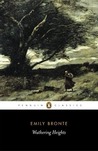
Review: Wuthering Heights

Wuthering Heights Wuthering Heights by Emily Brontë
My rating: 3 of 5 stars

I can see why people hate on this book, especially if they had to read it for school. Most of the characters are either horrible people or annoying at best (lol Nelly), although for quite intentional reasons. The driving force or motivation behind the story is basically an unhealthy relationship between two unlikeable people, and so much time and potential are seemingly wasted as a result of a situation that could've EASILY been avoided if the characters weren't so idiotic and hot-headed. If you're the kind of person who finds it difficult to avoid trying to solve people's problems, I would recommend avoiding this book as such.

That said, I still found it fairly entertaining to read. I've discovered that I have a bit of a thing for 19th-century gothic works, and the atmosphere in this one is super-charged with that in all of its gloom and doom and hints of the supernatural and just pure emotional angst and ugh, I just love it haha. There are some intense scenes here, and one moment in particular that is uncomfortable/taboo even by today's standards, which knocks it up a peg in my book, perhaps compared to say, The Scarlet Letter (all that fuss over something most people wouldn't care about as much today). And there's something to be said about using literature to more fully observe and understand unlikeable people and their circumstances without actually having to deal with them in real life.

When it came down it, there were elements of Catherine and Heathcliff's ultimately unsatisfying relationship that I resonated with, surprisingly. That sense of taking another person you love completely for granted, to the point where you eventually fail to see them for who they really are anymore. How easy it is to become so consumed by disappointment and regret over words left unsaid, actions left undone, for years after the fact, for being "too late." How bitterness and resentment can affect the people around you, and within a family, can have destructive consequences that propagate to the next generation onwards. A lot of these are very real to the human experience, and I think Bronte does a good job of capturing those sentiments in the world she's created.

Basically, if you're willing to give it a chance and have an open mind, it's not all that bad. There are definitely some interesting lessons and thoughts you can take away from an experience in the Heights. But if you're currently looking for a book to escape with or characters to like and root for (which are perfectly good reasons for reading by the way), don't bother with this one... unless you somehow also get a kick out of confronting the worst of what humanity has to offer (by stuffy 19th-century standards anyway).