Saturday, January 15, 2022

Review: Infinite Jest

Infinite Jest Infinite Jest by David Foster Wallace
My rating: X of 5 stars

Requires an attentive re-read to really process (given that the first part of the book is chronologically the last) and I'm not sure when I'll next be in the mood for that, considering how difficult it is to maintain focus in some of the passages (Gately's stream of consciousness sections in particular). I'm enjoying reading up on other people's analyses of the book though and piecing together the connections I missed initially.

also random but I would love to see a real-life enactment of the Eschaton passage of the book (in more detail than this Decemberists song).

Monday, December 27, 2021

Review: Homo Deus: A Brief History of Tomorrow

Homo Deus: A Brief History of TomorrowHomo Deus: A Brief History of Tomorrow by Yuval Noah Harari
My rating: 3 of 5 stars

Not sure how much time I actually want to spend elaborating on this (lately I've not been in a mood for thinking through longer reviews), but my personal takeaway on this book is that it's got a lot of good thought provoking ideas, particularly when it comes to the historical focus...

But the presentation of said ideas, or rhetoric, what have you, is a bit lacking-- and this is coming from someone who is already inclined to agree with the arguments and ideas proposed here. Harari has a tendency to make rather sweeping statements (free will doesn't exist! machines can understand you better than you can!) as if his conclusions are already a given, and even when he goes backwards through the evidence to explain what he's saying... it somehow doesn't come across convincingly enough for me?

A better writer than me can probably expound on the details here more clearly, but I'll just say that the people who would need to be convinced by Harari's insights are likely not going to come off from this book with their minds changed, not with the attitudes that he's bringing to the table. In addition, the future-facing material requires more suspension of disbelief to accept given how much more speculative it is by nature (I found myself rolling my eyes internally at some of the writing on wearable device tracking... although disclaimer, I work in that industry).

All of that said, I think this book is overall a step in the right direction of thinking, but there are gaps in its arguments that become more apparent in light of events that have happened since it released in 2016 (pre-USA election) that cause it to not age as well even just a few years since its release. Most notably, I think the final chapter needs an update to account for recent developments around Q-Anon and misinformation, as that puts a major damper on a lot of the potential suggested around Dataism.

I would recommend reading Sapiens first if you want to get a feel for Harari's writing and its strengths. I had similar criticisms of that book back when I read it (if anything this book suffers from the same criticisms but worse), but the much more history-centric focus of it means that it doesn't suffer as many of the same burdens as a speculative work would in convincing people and as such I think the overall product is stronger. I'm looking forward to eventually revisiting that book in comic form also.

(Side note: this is one of those areas where I prefer my nonfiction to be less "pop" and more dry/technical, almost to a fault of it own of boring-ness. But of course, I imagine most people motivated enough to read this book will probably be fine with it as is.)

Saturday, December 25, 2021

Review: 2666

26662666 by Roberto BolaƱo
My rating: 4 of 5 stars

A semi-disjointed 5 part epic where the true connections between the parts aren't really fully clear until the final ~20 pages or so (out of 900).

The central subject that connects each of the parts in setting (perhaps less so the first and last parts at first glance) is the femicides of Santa Teresa, in turn inspired by the real-life femicides of Ciudad Juarez that took place during the 90's and 00's. The true meat of these incidents is not really addressed until the 4th part of this book, but until then you have to wade through 3 loosely connected sub-novels (themselves split across multiple narratives/viewpoints) that tend to digress and meander a lot on their own accord and are tonally distinct enough from each other that they each could've been their own novel as Bolano apparently intended before he died.

The prose isn't difficult to read compared to other similar-length long form works (I'm thinking Naked Singularity, Gravity's Rainbow, Infinite Jest, etc). It is however easy to lose focus when the digressions happen and without a clear or immediate sense of why they're happening. That said, there is an overall pessimistic, cynical theme of degeneration that could be seen as a constant here, with unresolved tension; relational connections missed; social and political incompetence; dream-like moments that seemingly amount to nothing in reality; and then of course the violence itself; although not all of it is hopeless especially towards the end.

The Part About the Crimes is particularly senseless in the way it clinically recounts each of the individual murders that takes place, describing the crime scenes and victim accounts in gruesome clinical detail. I think after the 10th or 15th murder I was already starting to feel desensitized (when you think about the reality that actually happened, how much more tragic it was), and then it just kept on going for another 200 pages of death. Such tonal whiplash compared to the first part with its almost mocking accounts of the hedonistic critics.

Almost every storyline in this book is never completely resolved within the plot itself -- thematically, perhaps yes, but not in actual climactic detail. It felt weird to end a 900 page journey feeling unsatisfied in that sense, even though in retrospect I can see why things are left the way they are (apart from the obvious fact that Bolano himself died before this was published; I have a feeling not much would've changed plot-wise even if he had survived). Given the subject matter and the fact that most of the real-life murders themselves were never actually solved, it makes sense.

I feel like I've already written a lot here while barely touching an inch of what 2666 actually covers or means; one could probably get lost reading up on the discourse over this book as much as the book itself (adding to my list of "books to read up on after reading"). There are so many ideas and thoughts here, almost to the point where it can feel like Bolano just decided to throw everything that was going on in his head at the kitchen sink and then some, debatably for better or worse.

Honestly, I feel like something as reductive as a "4-star" rating on goodreads is disingenuous here, because at the end of the day, ratings barely convey everything there is to unpack about a book like this (where I haven't even fully figured out how much of it I truly "liked" or "disliked"). I don't regret reading this book by any means, but I do find myself at a loss wondering how much of it I truly "enjoyed" given the subject matter. But perhaps that isn't the point of reading a work like this in the first place.

Tuesday, December 21, 2021

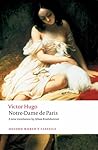
Review: Notre-Dame de Paris

Notre-Dame de Paris Notre-Dame de Paris by Victor Hugo
My rating: 3 of 5 stars

One of those rare cases where I find that I prefer the adaptations over the original, although I don't regret reading it.

Some aspects of the story haven't aged well (really not a fan of Esmeralda's characterization in the book) and were thankfully changed by the time Disney's adaptation came around. And Victor Hugo probably could've used an editor here cause some of the rambling digressions can get a bit much (...doesn't inspire me to read Les Mis anytime soon).

The strengths that make this story stand out though are still there: the focus on preservation of Gothic architecture (which honestly wasn't a thing till Hugo called it out here); the role that architecture plays in society and persists through pivotal human events; the chilling nature of villain so high up in the church like Claude Frollo; and the final sequence in general.

Now excuse me while I go searching for clips of the stage musical that got robbed of a Broadway run.

Thursday, December 31, 2020

Review: Mrs. Bridge

Mrs. Bridge Mrs. Bridge by Evan S. Connell
My rating: 5 of 5 stars

This review is really more about the 1-2 punch combo of Mrs. and Mr. Bridge, both of which I read this year (although I'll admit, by the time I got around to the Mr. I’d already forgotten a lot of the Mrs. and needed a refresher).

The gist of these books is that they present a series of vignettes in the lives of an "average" Kansas City couple living during the time period between the two World Wars. The fancy literary term of the day here is pointillist fiction (a term I think borrowed from the artistic movement best exemplified by George Seurat of A Sunday Afternoon on the Island of La Grande Jatte fame) -- it's through these seemingly benign episodic encounters that you come to appreciate a fuller picture of what life was like for the nuclear American family in the day, or more specifically, the type of family that best exemplifies the American Dream without fully realizing all of its implications.

In other words, these books are unspoken tragedies, and they explain a lot about a particular distinctly American mindset that I'm sure continues to persist to this day.

The Bridges, by American standards (make of that what you will), are well-meaning parents. But there's so much they miss in their own interactions with their kids, with their communities, and with each other, and moreover so many moments where they "almost" get it right and then fail because they're stuck in their own ways of thinking, that it's frustrating beyond measure (again, putting up that disclaimer to avoid if you can't handle books where you feel the need to fix the characters' problems for them). These are probably the most direct examples of that infamous Socrates quote that I imagine probably sees overuse in high-school English papers: "The unexamined life is not worth living."

What honestly bugs me about the Bridges so much is, I can see it. I can totally see families in America living like this, fluttering day-to-day, moment to moment chasing after some mirage, some ultimately meaningless idea of an American Dream without realizing the cost that comes with it even as their kids and social circles ultimately abandon them. They're so stuck in adhering to these ideals that they end up ill-equipped to deal with real, meaningful social change as it happens around them (note: this is just in the decades leading up to the 60's). And then they almost wonder what happened decades later as they see more than half of their lives go by, and... what exactly to show for it?

If you only had to read one book, I’d recommend Mrs. Bridge first as it’s much more of a standalone book that gets the point across really well. Mr. Bridge is essentially a companion book written a decade later that fills in the gaps of the story from the husband’s point of view, with some additional moments informed in retrospect by the chaotic experiences of the 60's (i.e. expect to see more of the race relations perspective played up because Mr. Bridge is totally a racist asshole and btw it's Kansas). But without knowledge of the overarching plot from the wife, his story honestly still feels a little incomplete all the way to the ending.

Sunday, December 6, 2020

Review: The Way of Kings

The Way of Kings The Way of Kings by Brandon Sanderson
My rating: 3 of 5 stars

I'll be honest, it took me a long time to really become sold on this book (which doesn't exactly help given that it's over a thousand pages).

Brandon Sanderson's greatest strength (world-building) is perhaps also in effect a contributor to one of his main weaknesses, in that he has to spend a lot of time setting up the moving pieces in his ever-expanding Cosmere universe before the worthwhile moments can actually happen. But until you're able to see what or where he's building things towards, it's easy to get lost in the details and then start wondering how much of what you're reading actually matters, which becomes a compounding issue the longer your book is-- and for the record, I still have no idea wtf was up with more than half the interludes in this book even after finishing it.

The characters are all right if not a bit difficult to follow, or at least in audiobook form, especially if you get made-up names confused easily (seriously, could he not come up with more distinct sounding names for Dalinar, Elhokar, Gavrilar, Adolin, and Renarin). Kaladin gets fleshed out the most through backstory in this book, even though his characterization ends up feeling a bit... vanilla (I've probably seen way too many stories with protagonists obsessed with protecting people, especially in anime/manga). Shallan is annoying at times but probably has the most interesting backstory exposition in her segments apart from the obvious moments in Dalinar's story. Sveth's story was the most captivating overall, but he also turned up the least so eh.

It wasn't really until the last third of this book when I really started getting invested in what was going on with the backstory enough to want to keep reading the rest of the series, which I've heard gets progressively better after this one. That said, I honestly did find some of the progression here boring at times, but I'm hoping that enough of the world has been set up at this point for me to actually want to pay attention as things go on in subsequent books, so I'm progressing with cautious enthusiasm here. But we'll see.

Monday, October 12, 2020

Review: Solutions and Other Problems

Solutions and Other Problems Solutions and Other Problems by Allie Brosh
My rating: ---

I don't really feel comfortable rating books tied so personally to the author's experiences like this one, but if you enjoyed Hyperbole and a Half, I heavily recommend this one as a follow-up. The subject matter honestly feels heavier (considering the last one covered her depression... that's saying something), but it also feels relevant especially in today's world, in the midst of COVID when it sometimes feels like at least half of us are going mad.

The experience of reading this reminded me of the times we covered absurdist literature in high school. It's funny because back then it just seemed like the authors we read were just weird or high on drugs or the [lack of] meaning of life or something, but I don't think I ever really truly understood the impulses that led them to write those works in the first place. I just didn't have the life experiences back then to really get it.

Which leads me back to Allie here. She gets it.

And it takes her a while to... get to the point of getting it, framing it within a series of seemingly random stories that are often hilarious enough in their own light (I will never get tired of her funky drawings of pets lol). But once her setup starts to come together and she makes it clear where her ideas really are, it all makes sense... how much it doesn't make sense. What life really feels like mentally post-depression, when normally you would expect things to come together. But sometimes they just don't.

If you've tried following Allie's story at all over the past seven years since she basically disappeared off the face of the internet, this book explains a lot. Honestly, I feel like most people given her circumstances would've probably receded into permanent Bill Watterson-like obscurity for the sake of their own mental health, because I sure as hell would have. Life is difficult enough as it is.

But all that said, I'm glad she's back.