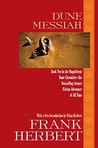
 Dune Messiah by Frank Herbert
My rating: 3 of 5 stars
Seeing as how this novel is the sequel to Dune, I have to say I was slightly disappointed- I don't think it stands alone as well in comparison. Technically yes, the messages are different; however, Dune ended in such a way that I felt satisfied enough to not read any further if more books didn't exist, but at the same time I'd still be open to reading further. With this installment, I don't really feel satisfied enough in the same way... which seems to be more of a reason to read the next book, as even the foreword admits (if I recall correctly anyway). If anything this book feels more like a setup for the next one (Children of Dune), which I guess I should read next anyway. Dune just acquired a typical trilogy structure.
The majority of the book consists of a lot of talking, plotting, discussing, planning behind the scenes and so on. There's a number of factions in the Dune universe that all have their own agendas going on here, which results in a lot of conversations between folks where one party is second guessing what the other person is saying or questioning their motivations or trying to anticipate what they might do or say next, which I think is fairly typical for a politically motivated sci-fi/fantasy story. The third person narrator tends to jump back and forth between pretty much everyone in every conversation, which allows us to have more objective insight into the conflict itself, covering a broad array of issues like the aftereffects of the rise of political/religious movements, and the logistical and moral issues their leaders must face. It's definitely material worth stepping back and mulling over for a bit... even though at the end of the day, it technically is mostly a fat load of talking.
Granted, some action does happen in this book, more towards the end, but at the same time, I had a hard time appreciating it as real events, the kind that stand out in a novel and leave an imprint in my imagination and remind me why I'm reading novels in the first place. It just felt more like, oh, here's some stuff that happens and some conflict and some setup for the next big thing that we can vaguely hint at for now. I mean yes, what happens to Paul in this book is probably about as significant and important to the message and scope of the series as what happened in the original book, but it doesn't feel complete or striking without knowing the resolution that (I'm hoping) comes in the next one. Part of me feels like it'd have been better if they'd just combined this book with Children of Dune and made it into two halves or the first third of THE sequel to Dune, like they apparently did with the TV series anyway.
That said, I appreciated the conversations that did happen. It was fun getting into the minds of the individual characters and sharing in their confusion and wonderment about their future and the uncertainty it brings... ironically, even though Paul (and perhaps Alia and some others) is supposed to possess prescient knowledge, it doesn't resolve everything as simply as we would like.

No comments:
Post a Comment