Saturday, December 27, 2014

Review: A Naked Singularity

A Naked Singularity A Naked Singularity by Sergio de la Pava
My rating: 5 of 5 stars

That was one hell of a debut novel.

Not that I usually focus on that kind of a detail, but in this case it's noticeable. I came across this book by accident from this somewhat random reddit post 3 years ago, and it seems like it's only just started gathering attention in the last couple of years as it finally got reprinted. I can't say I've read anything like this before- well a lot of reviewers and the back cover will draw comparisons with the likes of David Foster Wallace or Pynchon, and it does happen to digress all over the place- but it's also more way more readable than Gravity's Rainbow or other so-called difficult novels of the same vein.

Rather, if you're the type of person whose mind tends to introspectively wander a lot between arbitrary intellectual to pseudo-intellectual topics on things like the nature of death and the true meaning of perfection on a regular basis to the point where it leaks into your everyday conversations, then this is the novel for you, because that's practically what makes up most of this book. Luckily the dialogue often turns out to be funny in a sarcastic and witty kind of way as well, so it's not like you're just reading someone's pointless half-crazed ramblings on life the way you might be turned off when talking to someone like this in real life. Honestly, I wish my daily conversations were always this detailed and amusing. But that said, this isn't for everyone, as some of the less favorable reviews out there would suggest.

For the record, there are also a bunch of actual ongoing narratives here. Some are obviously relevant- like the cases Casi takes on as a public defender (one of which was particularly heartbreaking) and their impact on his character, and the planning for the "perfect" heist; some provide a backdrop, like the news story about the kidnapping of baby Tula, and the antics of Casi's TV character-psychology-or-maybe-physics-obsessed neighbors; and others will just stretch your suspension of disbelief, like the detailed yet rather engrossing account of the boxing career of Wilfred Benitez (seriously, I've never found boxing this interesting before), or some bizarre time-space shenanigans on the level of the book's title that I still haven't made sense of, or maybe just the fact that every character in this book is probably either crazy or collectively tripping on some weird shit because they sure sound like it.

The scope of this book is really all over the place (befitting the mantle of "maximalism") to the point that for a while you don't really know where the plot is going, or if there even is a real plot because it feels like there isn't when there should be one, even though the often quotable musings of Casi and friends are entertaining in themselves. Eventually the plot does start to come together past the halfway point, but it's still slow and methodical overall bar for a few intense thriller moments, for reasons that will become obvious as they come into focus.

Given the nature of Casi's job (which he shares with the author) as a defense attorney, the book pays considerable attention to the state of the New York justice system itself and all of the frustrations experienced by the parties involved, especially as Casi's life starts to spiral further out of control in the midst of it. This is enhanced by De Pava's attention to detail in many areas, such as the legal jargon that an attorney of Casi's stature would be familiar with, the wide variety of cases and scenarios encountered in a short time span, and the convincing street lingo of Casi's clients, to an extent that reminds me of The Wire and even more recently the podcast Serial... only I'm pretty sure your average public defenders wouldn't be heavily debating metaphysics as part of their daily work routine. (But that does spice up the narrative a bit.)

To witness all of this in action, one just needs to read the stellar first chapter, a fascinating account of Casi's usual day at work. And it's all a wild ride from there.

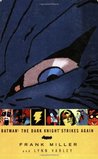
Review: Batman: The Dark Knight Strikes Again

Batman: The Dark Knight Strikes Again Batman: The Dark Knight Strikes Again by Frank Miller
My rating: 3 of 5 stars

So I didn't think it was as bad as it's been made out to be by most people, but it's definitely a step backwards from The Dark Knight Returns. The art here is pretty fugly for one thing; TDKR had enough structuring and subtle details to make it feel refined, whereas TDKSA features much larger, scattered, wilder and dare I say sloppier looking artwork. Also, the storyline overall seems to be less about Batman than it is about the rest of the DC universe superheroes left out from TDKR; the role Batman plays in this book is such that it feels more like a Justice League story (or remnants thereof) than anything else. It's really more of a sequel to Superman's story from the last work- that conflict of ideals between him and Batman- than it is to Batman's alone.

Gripes aside, the story itself is fairly entertaining so long as you don't take some of the writing too seriously (I think Frank Miller kinda went off the deep end sometime in the last decade) and look at it more as a what-if-dystopian-future-Justice-League-comeback piece than a pure Batman one. It's wacky, it's wild, and it's fun... and a bit epic in its own way. I wouldn't mind seeing an adapted version of this, although with better looking artwork preferably.

I suppose we couldn't have expected that much more from a sequel to a tale that didn't really need a sequel to begin with, but I can appreciate what we wound up with anyway (well, minus the Robin hate... I don't really understand what Miller has against Robin, poor guy. See All Star Batman and Robin The Boy Wonder also).

Friday, October 24, 2014

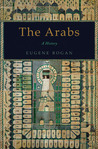
Review: The Arabs: A History

The Arabs: A History The Arabs: A History by Eugene Rogan
My rating: 4 of 5 stars

I'm not entirely sure why I decided to read another survey of Middle East history book so soon after finishing the first one, but I finished it anyway. At least it helped to solidify events in my memory more, considering that while reading this I was starting to realize how much I'd already forgotten from the last book and it's only been two weeks. So yes, reviewing material after you've read it is helpful if you actually want to retain anything. [and the sky is blue.]

As the title suggests, the emphasis in this book is on the history of the Arab peoples, which means that unlike other Middle East history books, Turkey and Iran aren't really covered much (aside from their influence on the Arab nations) because their peoples aren't really Arab themselves, despite having a significant Muslim presence and being so close by. Instead, you get plenty more coverage of the North African Arab nations west of Egypt: Morocco, Algeria, Tunisia, and Libya, and it was great to be able to fill in the picture from those perspectives. The emphasis here is more on modern history approaching 20th century also, although this time there isn't a book subtitle to make that clear.

The main thing that differentiates this from a standard non-fiction history textbook is that it comes with more vivid descriptions and details of events, often quoted directly from people who experienced them firsthand. It's great to have if you like hearing things firsthand ala documentary style. While it does make it a bit harder to recall the big picture sometimes, there's usually enough context and explanation provided to allow you to discern things at that level. But anyway, the details are the main thing that drew me to this book after finishing the last one; otherwise I don't think I'd have bothered as much.

Basically another solid read if you're looking for an introduction to Middle East history, and probably a bit more accessible than other comparable works. The main concept that Rogan tries to get at is that the Arab peoples have struggled for ages to get to a point of being able to determine their own destiny, and to this day have been largely deprived of that right by both foreign intervention and internal sectarianism. It's a crisis that continues to plague their consciousness today, in the face of a seemingly endless stream of suicide bombings and political assassinations and conflicts and civil wars and so on. This book actually came out before the Arab Spring happened, but from the way it ends off, there's no surprise why it did.

Friday, October 17, 2014

Review: And Then There Were None

And Then There Were None And Then There Were None by Agatha Christie
My rating: 4 of 5 stars

I think I've been subjected to too many "and then there were none" murder mystery scenarios by this point (...blame Umineko), but this one, the original of them all, still packs quite a punch all these years later. There's no detective, no Poirot or Miss Marple, and for that very reason it works. It still manages to draw you into that atmosphere that I don't really know how to describe well other than being calmly British with a subtly growing sense of paranoia. I don't think that came out right. But needless to say, it's a great choice for audiobooking if you're looking for something to listen to.

(To be honest, part of me isn't entirely sure if the mystery is that solvable, considering that some of the clues revealed after the fact felt more like a stretch to me... but aside from that, I'm pretty satisfied with the ending, considering that I already had part of it spoiled for me a long time ago but still didn't see the final reveal coming anyway.)

Tuesday, October 14, 2014

Review: The Hunger Games

The Hunger Games The Hunger Games by Suzanne Collins
My rating: 2 of 5 stars

Obviously this has been said before, but this book feels really reminiscent of Battle Royale. Apparently Collins had never read or seen that series when she wrote this, which I guess speaks more to how captivating the idea of having a dystopian story about teenagers fighting to the death is (and now that I think about it, there's also Lord of the Flies in that group). I don't think I really felt the full impact that this book would have given otherwise if I hadn't seen Battle Royale before, so I can't really judge how well it would go down for others (I assume great). At least, it's a pretty decent story and makes for a gripping fast read if anything.

The only personal gripe I have is with how the entire story is told solely through Katniss's perspective, which feels rather limiting considering how much else is going on during the Games that ends up only heard about or surmised. It's something that Battle Royale handled better technically, but I guess it's more of a personal preference for me as there are probably other reasons for the book to be told the way it is. Outside of her and Peeta and a couple of others, I found it hard to really feel anything about most of the other characters, including Rue. As the only glimpse of them you get is through Katniss's eyes, they end up seeming more like fodder for her to ponder on or make the plot continue, rather than standing alone as individual characters.

That, and Katniss isn't really the most interesting protagonist/narrator here. Her random emotional outbursts were a little hard to accept, considering that half of the time even she didn't know why she was getting angry and just went along with it. You could argue about it being the product of the stress of the games or whatnot, but it didn't really help her character much other than make her sound more annoying to listen to in those moments.

Overall, not the most novel or best version of this dystopian concept out there, but it's a fairly accessible and well written one at that.

Wednesday, October 1, 2014

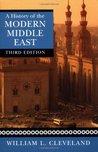
Review: A History of the Modern Middle East

A History of the Modern Middle East A History of the Modern Middle East by William L. Cleveland
My rating: 5 of 5 stars

A great read for anyone wanting a relatively comprehensive overview of the region, if not lacking a little in the descriptive details. Note that this is a history textbook and so will come across as a bit drier compared to other nonfiction books, but for an introductory classical historical treatment of the Middle East from early Islam to the present day (up to the 2011 Arab Spring in the most recent edition), I'm guessing it won't get much better than this. That said, I hear Gelvin is recommended if you're looking for something more concise and to the point on how to actually approach this subject on the other hand.

The perspective of the narrative here is primarily told from the viewpoints of the governments of the Middle Eastern nations themselves over the Western ones, although there's naturally plenty of coverage of the latter anyway. Egypt, Turkey, Iraq, Iran, Syria, Lebanon, Jordan, Israel, Saudi Arabia, and the Palestinians take the spotlight with occasional digressions to the north African nations and the Gulf States. Emphasis on the modern in that maybe 80% of the book is concerned with developments of the 20th/early 21st century, with the centuries before that point mostly summarized to provide context for everything else.

Given the vast scope of material to be covered in several hundred pages, a lot of events are mentioned in passing only to point out how they fit into the bigger picture, so I found myself wiki-ing a lot of incidents out of curiosity anyway when the details were scarce. As far as the big picture goes, Cleveland (and Bunton who took this up after Cleveland died in 2006) does a good job of pointing out trends and analyzing causes and effects from as wide and as neutral a perspective you can probably get, even regarding the most recent events. The Western perspective is also addressed (there's a whole chapter on America's role in establishing hegemony in the region post-Cold War era), but only insofar as to convey the significant impact that Western views have had on the region, given their frequent tendency to ignore the historical and present context when dealing with it.

Reading this made me appreciate the fact that a lot of the issues that plague the Middle East to this day are fundamentally ingrained in its geopolitical history: from the arbitrary forced formation of nation-states post World War I, to the frequent outsider intervention of Britain, France, the Soviets, and the US, to the unique natural (oil-rich) and political environment of the nation-states themselves, allowing authoritarian governments to prosper and persist at the expense of their people, while hindering the development of any viable movements that might actually be able to replace them and last. Islam is only one part of a bigger picture, and to focus primarily on the religious aspect of things, for good or bad, is to ignore the fact that there are other primary and often material causes involved that would encourage the people of the Middle East to turn to Islamist movements in the first place; many of these causes are problems that have no easy or simple solutions to begin with. It's difficult to expect any government to be able to satisfy the demands of a population that is ideologically at odds with itself or impose reforms via a political system fundamentally designed to discourage such developments.

Oddly enough, as the book points out, there's even an example of a secular state turning more religious (Turkey) and a religious state turning more secular (Iran) within the same timespan, both because of the population growing dissatisfied with the way their regimes were dealing with their issues... and in other words, life is complicated.

Wednesday, September 24, 2014

Review: Jesus and the Victory of God

Jesus and the Victory of God Jesus and the Victory of God by N.T. Wright
My rating: 3 of 5 stars

Finally finished this one! In some respects, particularly towards the beginning, it felt more like a chore to get through this time compared with book 1 of the series, as every time I came back to reading this I’d already forgotten which 19th/20th century ideas were associated with whichever theologian/professor Wright happened to be referring to at a given moment. Of the ones mentioned frequently, the only things I can recall now is that Schweitzer was responsible for claiming that Jesus was an apocalyptic prophet who believed that the end of the world would happen within a century, and that Bultmann preferred to disregard any historical study of Jesus whatsoever in favor of focusing on the ideas of the New Testament itself. And then something something Borg Crossan Jesus Seminar. (Well okay, so I had to wiki those theologians anyway to write that. Shows how much I actually retained from this book.)

To be frankly honest this book gets a bit repetitive at times even though the story is kind of interesting when you think about it, which is partly why it took me a while to actually get around to finishing it. So to save myself the effort of having to reread the whole thing later, and I guess for anyone else who’s interested but doesn’t actually feel like reading a 700 page theological book, I’ll post a bit of a summary here. But if you have the time, go ahead and read the book anyway. It’s not bad by any means.

So anyway, this book is basically an attempt to discern Jesus’s beliefs and aims primarily through analyzing the Synoptic gospels (Matthew, Mark, and Luke… not so much love for John) and other relevant sources, both historical (Josephus and other historians) and intertextual (passages the gospels reference from the Old Testament, the deuterocanonical books, etc). The methodology used - an analysis of the stories, praxis, symbols, and questions encapsulating Jesus’s worldview - was elaborated in detail in the previous book of this series. But ultimately the point is to engage this study in terms of Jesus’s historical context, and not whatever modern day theological biases or lenses employed by any of the theologians that Wright has criticized in the past, like the ones mentioned in the first paragraph. The first part of this book is essentially a survey of past studies of this sort, and needless to say I didn’t retain much of it, but oh well.

When it actually comes to the main focus of this book, Wright's beliefs are more in line with Schweitzer’s as was mentioned before, except that he redefines the use of apocalyptic language as repurposing exaggerated cosmic imagery to metaphorically describe current and future events in real life as the people perceived them to be. Meaning, those prophets/books using apocalyptic imagery like Daniel and Ezekiel and Zechariah, and ultimately Jesus himself, weren't predicting how the end of the world would happen (as modern-day rapture/second coming/"parousia" obsessed Christians are prone to think... Wright uses that last word a lot), but rather more concretely, events that second Temple Jews and their descendants were anticipating as the resolution to their own storyline. In this case specifically, the return from the Exile, which would happen through the restoration and vindication of the nation of Israel from its enemies by some God-appointed leader who would be called the Messiah, as a sign of God finally returning to his people after centuries of forsaking them.

(As for why they were expecting these things, it’s basically the story of the entire Old Testament of the Bible as a whole. Technically the “return” from the Babylonian Exile had already happened, but as Wright puts it, people didn’t really consider perpetually living under the Roman Empire a real return. They wanted the return of the Kingdom of Israel, like it was back in the glory days of King David and the kings before the Exile. Also, if Wright's knowledge is any indication, the story of the Maccabees from the deuterocanonical books often excluded from the Old Testament had a much larger influence on what was going on than I realized. Should probably read those sometime.)

Of course, given the way that prophecies in the ancient world worked, these events were purposely vague in description and conceptually abstract enough such that how they would actually come about was anyone’s guess. This means that you had a lot of violent political/nationalist anti-Rome movements with some random Jew out of nowhere claiming he was the Messiah foretold, and then some riots and revolts happen and the guy gets crucified by the Romans and then oh wait, never mind. And in the meantime you had the Second Temple of Jerusalem standing in the middle of it all as the symbol around which these movements would concentrate, and other ruling parties of the day like the Pharisees trying to regulate people’s behavior in the meantime, because they saw strict daily adherence to the Torah… or their interpretation of it, anyway, as the means to enact the real return.

And then around comes Jesus, who while fully invested in this story of Israel, sees its resolution in a completely “paradoxical” way, as Wright puts it, subverting all of the Jews' existing stories and symbols. The return from Exile won’t happen in one of the nationalist movements that so many Jews are looking towards, but rather in a humble, peaceful one that requires surrendering nationalistic expectations. Adhering to the Torah and submitting to the Temple is no longer necessary or sufficient for Israel’s revival, as these symbols have failed to fulfill their purpose and are partly responsible for the stagnation of the Jewish faith. The Messiah will not bring about the vindication of Israel through violent political action on a throne, but rather through serving the least of the kingdom- the poor, the ostracized, the unclean, and ultimately through being sacrificed himself in a humiliating execution on a cross. And in rejecting Jesus’s message, Israel itself has become the enemy, the Babylon that was seen in all of the apocalyptic visions of the prophets, and will be punished in time - with the destruction of the Temple itself, which actually did happen in 70 AD. You can decide for yourself whether Jesus actually prophesied that or not.

Naturally, these beliefs infuriate a good number of Jesus’s peers, because in teaching them, and moreover healing the sick and claiming the ability to grant the forgiveness of sins directly, Jesus is effectively replacing the foundational symbols and rituals that God had provided the Israelites… with himself. And that’s basically the textbook definition of blasphemy right there, claiming to do what only God should have the power and right to do. So these Jews find a way to get him executed, and in so doing play right into Jesus’s hands because for some reason Jesus sees his own death as the solution to everyone’s problems- the act needed to vindicate Israel and initiate the return from Exile. And then the resurrection happens, but that subject is left for the next book in the series.

Wright essentially infers these notions about Jesus using the methodology described earlier- analyzing the praxis (healings and miracles committed), stories (parables told and past prophecies referenced), symbols (the triumphal entry into Jerusalem and the Last Supper) and questions (who are we?; where are we?; what’s wrong?) addressed by Jesus during his life ministry, in comparison with those previously addressed by the Jews themselves in the past. He also has his reasons for attributing these directly to Jesus as opposed to having some element of them fabricated either by the early church or one of the gospel writers, but I can't really articulate those well outside of him reasoning why it might make sense for Jesus to actually have those beliefs. It's difficult to say how much of this actually is true historically speaking- in some sense we really will never know- but at the same time, it's hard to deny how sound his arguments seem given what little evidence we do have; Wright even makes an appeal to Occam's Razor here. But that said, I'm just a part of the choir Wright's preaching to here.

Ultimately, all of this might either sound interesting or incredibly long-winded and complicated, except for the fact that Wright somehow feels the need to repeat a lot of the same theoretical ideas over and over again (paradoxical! vindication! redefining the word apocalyptic! not the end of the space-time universe! using cosmic imagery to invest real space-time events with their theological significance! and so on.) to the point where eventually you just get it already and are wondering why there's still 26000 more lines left in this ebook that includes all of the appendices in its pagination, which makes you think that you're only 10% done when it's actually more like 60%.

All this to say, it's nice seeing a concept that I learned about haphazardly over the years be fully explicated in a book by a leading modern-day theologian... but at the same time, I think I'm ready for something new and different now.
Sunday, September 14, 2014

Review: The Demon-Haunted World: Science as a Candle in the Dark

The Demon-Haunted World: Science as a Candle in the Dark The Demon-Haunted World: Science as a Candle in the Dark by Carl Sagan
My rating: 4 of 5 stars

If reddit is any indication, this book is a must-read for atheists/skeptics/people who are looking into those viewpoints, or perhaps everyone in general, and they've got a point there. Sagan does a good job of addressing a lot of those superstitions and folk beliefs that tend to continue to persist in our society, as well as explaining the kind of reasoning and tools that are needed to take them on when they come up. A lot of emphasis on made on such issues as the distinction between science and pseudoscience, and the reason why people are so susceptible to fallacious arguments and frauds in the first place.

You could almost call this book a "propaganda" of sorts for skeptical thinking and science as a way of life- and I have to admit I haven't felt so excited and pumped for all things science since before reading this book. But I think more importantly, it has a point with regards to the necessity of examining our own beliefs critically, as well as the dangers of allowing fraudulent arguments and pseudoscience to go unchecked in our society... Lest we repeat the mistakes of the past again. The chapter on the witch hunts was rather uncomfortable to read.

I'm ending this with a quote that struck out to me when I first read it. I think if I had to pick out the most significant message of this book, this would be it.
"Despite this apparent variety of extraterrestrials, the UFO abduction syndrome portrays, it seems to me, a banal Universe. The form of the supposed aliens is marked by a failure of the imagination and a preoccupation with human concerns. Not a single being presented in all these accounts is as astonishing as a cockatoo would be if you had never before beheld a bird. Any protozoology or bacteriology or mycology textbook is filled with wonders that far outshine the most exotic descriptions of the alien abductionists. The believers take the common elements in their stories as tokens of verisimilitude, rather than as evidence that they have contrived their stories out of a shared culture and biology."

Saturday, August 2, 2014

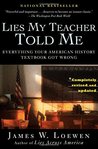
Review: Lies My Teacher Told Me : Everything Your American History Textbook Got Wrong

Lies My Teacher Told Me : Everything Your American History Textbook Got Wrong Lies My Teacher Told Me : Everything Your American History Textbook Got Wrong by James W. Loewen
My rating: 4 of 5 stars

I feel like I read this a decade late again, but it's still a worthwhile read for adults, particularly anyone involved in education although the subject is specifically aimed at high school history teachers. The title is technically a slight misnomer, as the book is really about the lies that high school history textbooks teach us, with history teachers being complicit by proxy whenever they adhere to a textbook without critically assessing it themselves or giving students the opportunity to do so.

Each chapter covers a different topic from American history that has been misrepresented by history textbooks, ranging from the heroification of people like Helen Keller, Woodrow Wilson, and Columbus, to (in the second edition of this book) 9/11 and the Iraq War and why these texts are usually found lacking when it comes to the more recent decades (as it turns out, simply saying it's too recent to study isn't really that solid of an excuse). The other half of the discussion itself is devoted to what these textbooks actually say and then attempting to analyze why they fail to properly represent the topic at hand, which ends up amounting to a myriad of possible explanations.

A lot of the conclusions reached aren't really that surprising or novel to be honest if you've read any kind of historical material (nonfiction, primary/secondary sources, studied history in college, etc.) outside of high school textbooks or in one way or another have managed to keep informed on these subjects post high school, but it's well worth having articulated and compiled here, and I would definitely recommend this for high schoolers looking to have their eyes opened to how history really works. If I still had my high school textbook I'd have wanted to make comparisons after reading this book myself... I wonder how much it'd have changed my understanding of things then.

Loewen's discussion naturally takes on a political, rather liberal bent regarding how to deal with the issues he sees in our education system and American society itself, where the obscuration of truth and censoring of alternative viewpoints is often pushed in support of nationalism and reinforcing the status quo. I personally happen to agree with his views in general, but conservative readers will probably take more issue with them and may outright disagree with him on certain points. I do not feel that this invalidates the overall discussion at hand though, as taking a critical perspective on our history is important in any respect and this book does much to try to encourage that in its readers.

The big takeaway here is that history is not set in stone, just like any other academic subject or source of knowledge we use in this world. It often is taught at a younger age as a mere collection of boring facts and names and dates to be memorized, which trivializes it in the eyes of young people and prevents them from actually being able to apply it to our understanding of current and future events when that ought to be real reason we study it in the first place. It's jarring considering that in other subjects like the sciences, we don't really have a problem acknowledging that we don't know everything and that our current knowledge is malleable and subject to change in the future... and yet we often assume that history itself is static and unchanging, when in reality our understanding and interpretation of it changes with time itself.

If anything, this book got my mind running again and reminded me why I love learning about history. Good stuff.

Wednesday, July 30, 2014

Review: The Count of Monte Cristo

The Count of Monte Cristo The Count of Monte Cristo by Alexandre Dumas
My rating: 3 of 5 stars

Quite long (>= 1200 pages unabridged) and melodramatic, although to be expected I guess. I can see why it's considered a classic, as the adventurous atmosphere seems like it could've been revolutionary for its time, and most of the last third is actually incredibly epic; this basically is the quintessential revenge story. However, the exaggerated melodrama got a little tiring for me after a while, and if I were to go off this novel alone, I'd expect most French men in the 19th century to be emotionally hot-headed and suicidal whenever things didn't go their way. (Oh wait, that's what duels were for.)

The plot takes a while to pick up- about a couple hundred pages for the main premise to actually set up, and then another several hundred for the actual main action to set up because the Count just happens to be incredibly patient about how long it takes get revenge on people... and even goes so far as to reason out why he's okay with taking so long at one point. It's still entertaining in the meantime, but I have to say as someone who normally hates seeing abridged versions of books, this is one book where I wouldn't be as bothered as much about it. You don't really need that many chapters to get to the gist of the storyline when it comes down to it, unless you're superficial like me and care about the bragging rights of having conquered the entire 1200+ page behemoth original (yes, I admit it).

There's also an awful lot of telling instead of showing, or rather one character narrating a story that happened in the past to such an extent that the narrator may as well have been the one doing it. I mean, technically the entire novel is having a story narrated to you anyway, but it starts to break your suspension of belief after a while of seeing one guy within the story recount an entire sequence of events plus dialogue word-for-word in one chapter, and then someone else do the exact same thing in a written letter, and then have it happen again in a suddenly discovered will (...why does this will need dialogue), and then so on. It's like that messenger-speech narrative technique they used in ancient Greek plays where they had some random character who no one cared about suddenly appear on stage recounting a horrifically tragic scene that just took place off-stage ten seconds ago... only most novels don't suffer the same kinds of restrictions that plays do and it's not clear to me why they still felt the need to do it here. But that's just me nitpicking anyway; it might well just be a 19th century Romanticism thing.

On a tangential note, considering the number of people who've come up to me in the past and been like "HOW HAVE YOU NOT READ THE COUNT OF MONTE CRISTO YET?!" I have to say that I still don't really see what the big deal is haha. I never had this book assigned for English in the past and it just never occurred to me to read it in my spare time when I was younger... and the long length didn't exactly help much either. But then again, I guess it's not like I go around chastising people for not having read Gatsby or To Kill A Mockingbird or whatever. (...but seriously, if you're going to be that way, don't talk to me until you've read Sound and the Fury or Portrait.)

Monday, May 12, 2014

Review: Petersburg

Petersburg Petersburg by Andrei Bely
My rating: 5 of 5 stars

This is one of those books where if you really wanted to fully appreciate it, you'd have to teach yourself Russian and dig into the original text, because as the footnotes in the back will tell you, there's no real translation that will do this book justice. But for those of us who don't have the time to do so, the current translation is pretty good as it is... although the Prologue and many other parts still look weird at first glance (but I'm guessing it's mostly like that in the original text also).

In part the story is intended to be understood by contemporary Russian readers of the early 20th century, as there are a lot of allusions and symbolism that will be lost if you don't have any working knowledge of Russian history up to that point, what with all the references to Peter the Great and Pushkin and The Bronze Horseman and how rectilinear Nevsky Prospect is and whatnot. Honestly, the only thing I could remember from reading this the first time around was that expanding spheres show up everywhere, and that was because the Slavic professor asked us to count how many times they showed up, which I felt was mostly distracting away from the real point. But anyway, if you have the patience to cross-reference or reread later, the footnotes to the current translation do a great job of providing a lot of the historical background, or at least to the point where I felt like I had a decent grasp of the history of the city afterwards without having to read an actual textbook.

All that said, if you can get past the obscure references and odd symbolism (well... considering this is a Symbolist novel), it's a great read. This is a novel that really tries to capture the spirit of the city of St. Petersburg and focuses on an issue that Russians, along with everyone else at some point, have struggled with for ages - their national identity. Are they really European, or Asian, or both or neither or something else altogether? (I've always kinda wondered that myself ever since seeing Russia for the first time on a map.) Particularly at a time where the country was undergoing continual turmoil with protests happening everywhere, amid a recent loss in an international war. Paranoia was rampant, and you can feel it throughout these pages.

It probably helped a lot that I reread this in preparation for a trip to St. Petersburg, as it gave me a chance to see the geographical features and quirks of the city come to life and made actually seeing those sites in person much more meaningful. Even past the historical/geographical context though, there's way more going on in this novel in terms of language, plot, themes, and so on that I have still have trouble processing even after rereading. It's one of those works worth coming back to if you can find the time - there's always something new to discover here.

Friday, March 21, 2014

Review: The New Testament and the People of God

The New Testament and the People of God The New Testament and the People of God by N.T. Wright
My rating: 4 of 5 stars

The first of N.T. Wright's epic 5 part book series on the origins of Christianity. Specifically, the series seeks to address two questions outlined in the first chapter, with respect to the New Testament:

1. How did Christianity begin, and why did it take the shape that it did?
2. What does Christianity believe, and does it make sense?

As the first title in the series, The NT and the People of God functions mainly to introduce the problems to be addressed by the rest of the series, as well the methodology that Wright intends to use while doing so, a process that he terms "critical realism." This is followed by a rather meaty set of chapters dedicated to explaining the historical context of both first century Judaism and the early Christian church at the time of the writing of the New Testament, as is known by modern scholarship today.

Much of Wright's attention is spent responding to the theories put forward by previous Biblical scholars (particularly Bultmann, whose name came up fairly often) in the modern/postmodern age, and his critical realism method is meant in part to address the flaws and mistaken assumptions that he sees in these theories. A lot of these issues are attributed to many a modern scholar's tendency or unwillingness to address the story of early Christianity on its own terms, preferring to read anachronistic post-Enlightenment ideas into the past (such as Christianity emerging from a Hellenistic or Gnostic worldview first and foremost as opposed to a Jewish one), rather than seeking to understand the historical context of a religion that more than likely sought to subvert the worldview of its Jewish predecessor in radical ways, or so Wright judges from the evidence available.

I can't really comment on how effective he is in making his argument due to a lack of familiarity with the theories in question, but from a layperson's perspective, his ideas are generally sound and help bring to light some insightful ways of understanding the New Testament that I hadn't realized before, particularly with respect to the different methods used in critical reading (pre-critical, historical, theological, and postmodern) and how the early Christians perceived themselves with respect to the existing traditions. Many of his claims are backed up with extensive research that can be referenced in the footnotes and extensive bibliography provided in the back of the book. His writing style is surprisingly accessible for reading in spite of all of this, which I think makes this a great gateway text for getting into further research in the field of biblical studies if desired.

Wright can be a little repetitive at times (lost track of how many times he used some variant of the phrase "investing space-time reality with its theological significance"), and at other points his argument feels a little incomplete or lacking in depth, which he even acknowledges sometimes, though part of this can be attributed to the low amount of available resources from the first century to go off of aside from the NT. Also, I'm not entirely sure if I agree with his proposal for critical realism as a sufficient epistemological method for general purposes, but at least it seems to serve this project well. Regardless, I'm looking forward to seeing how the rest of the series plays out.

Monday, March 17, 2014

Review: Ulysses

Ulysses Ulysses by James Joyce
My rating: 4 of 5 stars

So this novel is rather wildly inaccessible for a first time read-through. I know it draws a lot of attention for turning up on a bunch of "best of the 20th century" novel lists like the Modern Library one, but it's not something anyone should feel obligated to read to be honest, considering how much work it takes to get to a point of understanding it. But if you're open to exploring a fairly unique reading experience, then it ends up being a pretty worthwhile one in the long run, especially on multiple re-readings because there's so much more to be gleaned than is possible on an initial reading... although I feel like I've been saying this a lot for other books already, haha. Just don't expect to understand everything the first time around, because you won't.

Being a mostly stream-of-consciousness work, there isn't much of an interesting plot persay; it's practically ~780 pages covering an average day in the life of an Irish-Jewish man (is that a proper-proper adjective?). Rather, this is a book that's worth reading more for its experimentation with narrative techniques and linguistic wordplay, and the ways in which Joyce uses those to enrich an ordinary everyman's day with a sense of both bewilderment and grandeur. It makes you realize how incredibly complex our lives are even in the most basic of details, and how often we tend to just glance over them without realizing it. Some parts of the book are actually really moving once you get into it- one of the most affecting takes on the struggle for human connection and (surprisingly) surrogate fatherhood that I've read, ever, maybe.

Given how difficult it is to read for the first time, a few tips that come to mind when reading:

1. Read A Portrait of the Artist as a Young Man first. It precedes this work in time and gives a lot of insight into the backstory of Stephen Dedalus and his mental state, for which this novel functions almost as a sequel to. It's also shorter and technically more accessible, as it introduces you to some of the writing techniques that are expanded on in this book. If you can get past the stream of consciousness in that work, then this one won't feel quite so bad.

2. Other topics that help provide insight into the story: the general characters and structure of the Odyssey, Shakespeare's life and his major works, Irish national history at the turn of the 20th century, some of the major stories from the Bible, and the basic tenets of Catholicism... to name a few. But it's not really likely that most people reading this book would have all of that covered beforehand anyway; I would see these more as knowledge that would enhance subsequent readings.

3. Each of the chapters in the book functions as a largely standalone episode and relies on a different kind of writing style, ranging anywhere from the usual Joycean stream of consciousness, to a theater script with stage directions, to a Catholic-styled question and answer catechism, to a chaotic punctuation-and-paragraph-less thought blob that feels as though Joyce just vomited the novel onto its pages. In other words, they each read very differently. The difficulty fluctuates a lot, so one section of the book isn't generally representative of the rest of it. The beginning three Stephen-centric chapters in particular, while setting up for the rest of the novel, are a bit misleading as they differ a lot in tone from Bloom's chapters that take up the majority of the book.

4. I found it helpful to read a guidebook concurrently to get an overall feel of what was happening when I was having trouble with the writing style, and it actually made the process of re-reading individual passages a lot better as well, as you start to recognize a lot of details that you wouldn't notice on a first reading anyway. The Annotated book is also helpful for explaining the encyclopedic amount of allusions and external references, but isn't really necessary for a first go-over unless you like to interrupt your reading often.

5. Pay attention to objects and memories and sayings that occur more than once. Sometimes the details of a scene or memory won't be explained until several chapters after it's been introduced (you might not even have noticed it until that point), which ends up revealing that first appearance of it in a rather different light. It's really like trying to experience the memories/thoughts of another person without having any background knowledge of their past- it's not like you have to explain the context behind your own thoughts to yourself whenever you think them, right?

6. Don't take everything that's said or done at face value, because the line between what's happening in the external world and what's happening in people's minds is generally blurred to the point that the perspective will often switch between character thoughts and external narration mid-sentence. Not every conversation is actually being said, nor are people's impressions of what they see at any given moment necessarily accurate.

7. Just don't take the book that seriously to begin with. While there are overarching reasons for the narrative and word choices and references made, a lot of other stuff is just there because James Joyce is one of the biggest trolls in all of literature. (But that also makes for half of the fun with this book.)

Friday, February 28, 2014

Review: Pale Fire

Pale Fire Pale Fire by Vladimir Nabokov
My rating: 5 of 5 stars

This book can be deceiving, as it doesn't look anything like a novel, but it arguably is one. It basically consists of a foreword written by one author, a 999 line poem written by another, and an extensive commentary sorted into footnotes by the first author, and an index. The commentary itself is the real novel here, as the poem itself is... all right by poetry standards, I guess. But don't ask me cause I'm not a poetry person. Protip: don't listen to Kinbote in the foreword when he says to read the commentary before, during, and after the poem. You can do whatever the hell you want with this book.

But seriously, this book was one of the most fun reading experiences I've had in a long while. If there were ever a book in which writing notes in the margins significantly enhances the experience, I'd say it was this one. Sure, it relies on a lot of cross-referencing between the poem and the index and the footnoted commentary, but the ride became such a thrill as the "story" progressed that I didn't really mind it at all.

For lack of spoilers I won't say more, except to say that as usual, Nabokov's prose is king. He's so good at writing like an egotistical maniac. Although I have to wonder if he really is one... (From what I've heard, kinda probably.)

Monday, February 24, 2014

Review: A Dance with Dragons

A Dance with Dragons A Dance with Dragons by George R.R. Martin
My rating: 3 of 5 stars

Better than the last book, A Feast for Crows; the story finally feels like it's heading somewhere again. I guess it helps that Tyrion, Jon Snow, and Daenerys are finally back to give the plot a sense of direction, as without them the rest of the POV character chapters just feel like aimless, arbitrary distractions (granted, distractions that made for entertaining romps into the world of Westeros- that much I can appreciate). Even Theon's storyline alone in this book seems to accomplish more than the majority of AFFC, though, and what little details mattered from that book are continued in last third of this one anyway.

But at the same time, this book essentially suffers from the same problem that AFFC had: overwriting. In a way, most of the Song of Ice and Fire books have always had this problem, but the original first three had the benefit of taking on a conventional plot structure where their climaxes actually felt like an appropriate reward given (or in spite of) the length of each book.

This is less so with ADWD: Martin wound up writing so much for this and the last book that the major events that this book builds up to (The Battle of Slaver's Bay and The Battle of the North) got moved to the beginning of the next book, The Winds of Winter, and instead we're left with a bunch of cliffhanger moments that make it feel almost as if we've been stopped and left stranded right before the top of the roller coaster. There's no real resolution or conclusion of anything that's happened so far by the end, and given that we've had to trudge through over a thousand pages to get there, it almost feels like a rip-off. I say almost since I'm assuming the next book will come out... hopefully sometime in the next year or two. But you never know.

I recognize that Martin had issues trying to write both this and the last book in a coherent way - hence the splitting of POVs between the books by geographical location rather than making AFFC a two-volume work - but as this became less consistent towards the end of the book and more AFFC character POVs started coming back, it made me realize how flexible the chapter placement in this series is... and how awkward it is to suddenly have random characters turn up who you'd forgotten about from 500-pages-into-the-last-book ago.

I think it would've been more effective if he'd stuck to a normal chronological order and focused on making the character chapters more concise, perhaps condensing some of the aimless exposition details (so much writing about FOOD- no, I'm not interested in how cooked the locusts looked) and even scrapping some of the minor character POVs that barely contributed to the main plot; how many Greyjoy or Dorne character chapters do we really need anyway? Too much overwriting and even the likes of Tyrion or Jon Snow or Daenerys (well, especially Daenerys in this case... unfortunately) will seem whiny and frivolous. And if that happens, this series will lose a lot of what it has going for it.

Saturday, February 1, 2014

Review: Children of Dune

Children of Dune Children of Dune by Frank Herbert
My rating: 3 of 5 stars

On first look, it kind of surprises me how polarizing the reaction to this book seems. A number of fans of the original Dune (and perhaps less-so Dune Messiah) seem to hate on this book and the rest of the series, whereas others would see it as just as good if not better than before - one of my friends went so far as to tell me that Children is actually the REAL Dune. So I went into this book curious of that prospect, mentioning last time that the previous sequel, Messiah, felt significant but incomplete in some senses.

Having finished it, I would say that I appreciate Dune Messiah more now after reading this, as I realize now how that book could stand alone without this one. It really was meant to be a more introspective look into Paul's character post-Dune, whereas Children of Dune for the most part feels very different without Paul as the central narrative focus. As the title would suggest, the attention in this book is on his children who were born at the end of the previous book, the twins Leto and Ghanima, although the attention goes more towards Leto- particularly so in the latter half as the story progresses towards him confronting the issues that his father was unable to deal with at the end of Messiah. Children is effectively Leto's coming of age story just as Dune was for Paul, but with much different results, and as such it feels like the beginning of a new arc as much as it does a conclusion to Paul's story.

The plot here is better balanced between action and talking/plotting than Messiah was, which I think is partly due to the longer length of Children. I guess a Dune book wouldn't be complete without lots and lots of competing factions and interests and political machinations going down, and there's plenty of that to be had here. Alia's internal conflict as a pre-born "Abomination" serves as one of the driving forces of the events in this book, and combined with Leto's rise to power, it makes for a rather engaging story overall. However, none of the characters really reach up to the same level of depth or interest as Paul did in the previous books, to be honest (although I'm glad Jessica is back, after missing her in the last one). Leto probably comes closest, but his (and Ghanima's) unusually precocious nature as a 9-year-old makes him come across as infinitely more creepy than Alia ever did, and that makes it rather harder to appreciate him as a main character in the same vein as Paul.

In addition, one of the major events in this book doesn't really make much... narrative sense, to me anyway. I won't say what it is for risk of spoiling, but the book claims the presence of foreshadowing in Messiah that I felt was vague enough in that book to potentially have been anything. So when this moment does come, it feels very out of the blue, and from my understanding is part of the reason why some of the other reviewers on goodreads feel that the Dune series went off the deep end with this book. And I can sympathize with that, because to be frankly honest, the manner in which this event resolves most of the of the plot threads in this book and its influence on future ones feels almost like a deus ex machina. If it weren't for my interest in the conflicts themselves, it would've made my eyes roll.

So at the end of it all, I'd say that Children of Dune has a lot of interesting ideas, but as with its predecessor, the execution feels a little off, but in the opposite sense from before. Where Messiah lacked in plot and pacing, it made up for it thematically in its handling of Paul's story arc, whereas conversely Children has a better plot but comes with some questionable design decisions in the story/characters and even in the context of the overall series. As before, I feel like I have to read the next book to really get the overall message here, but to be honest I don't really feel as interested or invested in doing so (or should I say, ugh... more Leto). It'll probably be a long while before I get to next one, if I ever do.

Tuesday, January 28, 2014

Review: Anna Karenina

Anna Karenina Anna Karenina by Leo Tolstoy
My rating: 4 of 5 stars

So, that adultery book where the adultery happens 100 pages in and the repercussions go on for another 700 pages. Typical Russian author.

Of course, it isn't really just about Anna or the adultery itself, since there's an entire half (more than half?) of the plot concerning the male co-protagonist Levin, whose story doesn't really have much to do with Anna at all but occasionally intertwines with hers at some points. It winds up making for an interesting parallel between the two, where one falls and the other rises, and less so because of their different genders (I suppose you could make a case for Tolstoy having a preference for family-oriented women... but I dunno about that) but rather because of their contrasting life philosophies in the face of their problems.

And I stress the word philosophies, because of how abstract and long-paragraph-winded the writing can get sometimes with all the talk about ideas and how Russian society should progress and the existential plight of the farmer and whatnot. A large part of this book would really be relevant to an educated Russian reader of the late 1800's, whereas for anyone today it would probably feel more like a chore to read.

But when it gets to the relationships and the social commentary and everyone's internal monologues, the prose is amazing. Tolstoy (and I guess by extension the translators - I read Pevear + Volokhonsky) really has a way with words, of putting succinctly observations about life and the situations we find ourselves in that we might vaguely realize but not yet know how to describe. I can't say I've had any experience with any of the situations described in this novel, but some of the thoughts and emotions conveyed by the characters felt very familiar and close to home... or maybe that's just a strength of the writing.

Towards the end I found myself starting to dislike Anna more, but I guess it's easy to judge someone for their irrational thoughts when you're looking at them from a distance and not trapped in their shoes. In spite of how annoyed I got with her thought process later, it didn't make her last chapter in the book any less exciting, though; compare with Levin, who I liked more as a person but found more tiring to follow at times. There's also a ton of other great characters in the book who take the spotlight at times to the point where it's easy to get lost without the help of a character list (per typical Russian novel fashion) like the one my version had at the beginning. I wonder if it's just me, but I actually liked Alexei Karenin... until near the end anyway.

Overall, a pretty good read; just expect to put a decent time investment into it because it's thick and dense and not easy and occasionally tangential (but there's definitely been a lot worse).