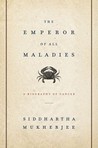
 The Emperor of All Maladies: A Biography of Cancer by Siddhartha Mukherjee
My rating: 4 of 5 stars
Pretty interesting and informative overview of the history of cancer- or rather:
1. our understanding of what cancer is
2. and how to treat it
(explained in reverse order in the book) which wind up as two parallel developments within science/medicine that up until recent times have largely not been correlated or dependent on each other, surprisingly. The author makes a good point that many of the successful treatments that exist today were developed without a full or even decent understanding of why or how they worked, and that even now, with our improved understanding of what causes cancer, we don't really have a treatment that has been developed or even enhanced because of that knowledge. But there is hope for the future.
Some chapters, notably toward the second half when the subject shifts from treatment to the genetics discoveries, can get technical enough to the point where it might feel hard to follow for anyone who didn't take biology in college or hasn't studied it recently. If you're reading this book, chances are you do have an interest in biology or medicine to begin with (considering most of the people I know who've read it were pre-med), in which case it'll be fine. Overall it's a fairly accessible read, and the author does a decent job of linking anecdotes and history and science together in one fun package. Just don't expect literary greatness or anything like that, because the writing can resort to certain repetitive cliches, and sometimes the quotes that preceded each chapter could feel forced or inserted just to give off an air of being pretentiously literate. Not all allusions and metaphors were created equal.
This book is incredibly thorough, or perhaps even too thorough, about each person, idea, concept, treatment, case study, and what-have-you that has been involved in the history of cancer. So much so that it made it rather difficult to get through at times, because after a while I'd start forgetting which professional was responsible for what treatment or theory or whatever happened ten pages ago because there's too much detail to keep track of. And I say this after both audiobooking AND THEN rereading parts of the same chapter multiple times until I just gave up and moved on (which is why it felt like it took forever to finish).
That's not to say the book isn't memorable or fascinating, because it is. I just wish my short-term reading memory capacity were better without having to resort to studying this book like a college textbook for a class. Of course, you could also check out the multi-part PBS documentary based off this book that just came out recently too.

No comments:
Post a Comment