Friday, December 4, 2015

Review: Absalom, Absalom!

Absalom, Absalom! Absalom, Absalom! by William Faulkner
My rating: 5 of 5 stars

Fairly difficult to read (well what do you expect, it’s Faulkner), though more consistent in that the difficulty doesn’t fluctuate as much as Sound and the Fury does; it’s easier than the most difficult parts of that book but harder than the easier ones. That said, SOTF is probably more accessible and appropriate for a new reader; the characters in that book are more easily recognizable and memorable (Benjy! Caddy! Quentin!), whereas this one really just focuses on the specter of Thomas Sutpen, aka the definition of Mr. Unlikable, which doesn't make this book any more enjoyable to read. Or well, I enjoyed it, but for different reasons.

(Also, I hate people like Shreve. "Wait/All right/Listen-" shut up Shreve you weren't there. And you sound like Navi from Zelda.)

It’s been too long since I read this already for me to give a more thorough review, but I will say that a few moments from this book still stick with me in the way that good literature always does-- especially the chapter adapted from Faulkner’s previous short story, “Wash.” Holy **** that ending. So good. And that final chapter ain't too shabby either.

It’s Southern (in all storytelling senses of the word: gothic, legendary, tragic, speculative, what-have-you), it’s epic, it’s sad... and it's surprisingly relevant if you want to understand the white American South mentality. It makes me wonder how much of it has really changed, over a century later. So much of what happens in this book, for all its twists and turns and climaxes, didn't really surprise me or change my view in the grander scheme of things: cognitive dissonance, racial hubris, self-serving ambition and victimization. We've all seen this before. Just look at the news in the past year.

It's as they say: "these wounds, they will not heal." (and that's the only time you'll ever hear me quote Linkin Park haha.)

Wednesday, September 30, 2015

Review: War and Peace

War and Peace War and Peace by Leo Tolstoy
My rating: 3 of 5 stars

Epic. But maybe a little too epic. I’d take Tolstoy’s advice here and not expect a novel if you ever get around to reading this huge tome, because it definitely stretches the definition of “novel” a bit. Anna Karenina is more conventional and straightforward to follow compared to this and is probably a better introduction to his writing style if you’re not ready to invest the time in this sink. (and that's ironic because Anna Karenina is also really long hah...)

That said, W+P is surprisingly not that difficult to read considering its length- well, compared with other similarly regarded lengthy epics like Ulysses anyway. The only real major impediments here are the large amounts of untranslated French (that is, if you’re reading a version that only includes the translations as footnotes like Pevear+Volokhonsky and aren’t fluent in French; you can make an argument for/against not translating the French, but at the end of the day it’s still a hassle to deal with the translation footnotes, let alone the actual historical footnotes) and the chapter-long philosophical digressions that become increasingly common towards the end of the book. The digressions themselves actually aren’t irrelevant to the narrative, even though they sometimes can feel that way; they try to focus instead on the greater subjects that inspired the telling of this story to begin with: topics like the functional differences between art and history when they overlap, what the human experience in war and peace reveals about the meaning of life, the power/lack thereof of rulers in light of history, why historians suck at their job (seriously), and so on.

It's all definitely worth contemplating in light of the actual story being told… but also rather tiring to read through at times, especially in the second epilogue where it's just nonstop philosophizing/pseudo-philosophizing for all I care (and I wasn't really impressed with the scientific analogies, but that's probably a sign of how the times have changed since this book was written). If this were a true novel, you’d expect the main fictional-historical narrative to speak these things for themselves, but no, Tolstoy just had to get in your face about them because of course these subjects matter, right? It almost feels like listening to a friend who rambles about politics because they just can't get over their obsession with it- of course politics matters (in that it affects how we all live directly/indirectly), but it's not something I want to hear or talk about to the point where I just vomit politics everyday for the rest of my waking life.

Regarding the actual story and its themes themselves, it comes off surprisingly relevant for a 19th century work centered on a period during the high point of the Romantic era (not that Romanticism is irrelevant by any means… but you get the picture). A lot of the emotions, moments, and experiences conveyed here seem almost prescient of notions I’d considered modern/20th century (like the apparent meaninglessness of war- I mean in the All Quiet on the Western Front / WWI sense), and there were definitely moments where I thought I’ve felt this before and then oh my god I’M PIERRE BEZUKHOV. Just Tolstoy being on point in expressing our thoughts and feelings before we even knew how to describe them (let alone were born to experience them) as always.

The pacing of course is slow/gradual, and it takes more than one-to-two hundred pages for the plot to feel like it’s going anywhere- unsurprisingly so given the number of focal characters there are to follow; even though Pierre, Andrei, and Natasha are often touted as the “main” characters, enough other characters get attention from the narrator (particularly Nikolai and Kutuzov/Napoleon to a lesser extent) that you start to realize this book is really less about the individual characters than it is about something much bigger and encompassing all of them. But it’s also interesting how much more lifelike the fictional characters are compared with their nonfictional costars, most of whom I wouldn’t have been able to tell otherwise given my lack of knowledge of this particular era of history if not for how much more boring it was to read about them, haha... Even the initially intimidating figure of Napoleon comes off as underwhelming and smaller-than-life the more he appears, albeit purposely so (since the unpredictable motion of history dwarfs the wills of "larger-than-life" individuals and so on).

In hindsight, I feel like the less consistently interesting parts of this book tended to distract or almost overshadow the better parts. One of the best things about W+P is its account of how individuals experience war in contrast with life outside of war; for his time, Tolstoy was probably unprecedented in his ability to capture such a feeling so succinctly- but with the amount of other material also crammed into this book, it was easy for me to lose sight of those moments after they had passed, especially towards the end.

All-in-all, definitely worth reading if you can get through it, but not an absolutely essential must-read rec if you value the limited time you have on earth, because for the extreme length of this book, it wasn't entirely life-changing or inspiring the way I've felt about other classics in the past, even though it did have its awe-inducing moments. Okay sorry, that might've come out a bit more morbid and sardonic than I meant it to sound. (But I kinda mean it. If it weren't for the fact that it was "only ~40 pages," I'd have probably passed on the second epilogue. I mean who writes second epilogues-let-alone-epilogues these days anyway??)
Tuesday, September 29, 2015

Review: Perdido Street Station

Perdido Street Station Perdido Street Station by China MiƩville
My rating: 5 of 5 stars

I remember a long time ago, the first time I read through the 3rd and 4th Harry Potter books, being really afraid of dementors, particularly after a certain scene in the 4th book that made me realize what they were capable of.

This book basically took that same fear impulse and elevated it to a level I didn't know was possible. It wasn't so much a particular scene at first (the one that makes you realize, "oh crap things are getting real now"), as it was processing the explanation that came after the fact of what had just happened, that made me do a double-take and suddenly grow deathly terrified of whatever was going on in this book. And it just grew worse from there.

They might as well straight up call this fantasy-horror, although the New Weird fits perfectly well too as it's plenty just straight up weird. The setting is much stranger than the generic Tolkien-esque or even modern day fantasy you might be used to- it hit me about ten pages in when I realized the main character was in love with an anthropomorphic scarab beetle. I think the most apt comparison would be some unholy mixture of Lovecraftian horror and steampunk, and I'm also reminded of the Planescape campaign setting, but it's unique enough outside of those influences such that I wouldn't limit it to those descriptors.

The story takes a while to pick up; the first 20% is really just acclimating you to the strangeness of this new world, and the premise seems just like a decent excuse to introduce the setting before the real plot takes over. But once it does, the city itself starts to open up in layers unseen, and you realize that it's really more about New Crobuzon than anything else, because the setting really is that fascinating (if not also terrifying).

If anything, this book makes me realize that I need to read more Weird stuff, because I just can't get enough of it (although I probably should've figured that by now after Planescape: Torment).

Sunday, September 27, 2015

Review: No god but God: The Origins, Evolution and Future of Islam

No god but God: The Origins, Evolution and Future of Islam No god but God: The Origins, Evolution and Future of Islam by Reza Aslan
My rating: 4 of 5 stars

A fascinating and relatively accessible intro for anyone unfamiliar with the history of Islam, although given my lack of familiarity with the subject, I'd be interested in hearing what other contemporary Muslims think, since I sometimes got the impression that Aslan's underlying opinions weren't the norm. The bias here can be a little noticeable at times, but for a reader new to the subject, it's still worthwhile.

The book covers the historical context in which Muhammad grew up, a general overview of his life, and the events following his death that led to the formation of the major branches of Islam. It also occasionally jumps around to how the history is linked to topics more relevant to the present day, including: leading female thinkers, the 1979 Iranian Revolution, a full chapter on Sufism (that to be honest didn't quite feel like it fit in with the rest of the book), the rise of the Wahhabi movement (read: important for understanding Saudi Arabia and associated terrorist orgs like Al-Qaeda, the Taliban, and most recently ISIS/IS) and the effects of European colonialism on the Middle East, among others, before finally commenting on Islam's potential future and why attempts at democracy in its native countries have failed in the past. That argument is a cautiously optimistic one, but as he points out, the war to decide Islam's future is currently being fought today in the Middle East and beyond.

Aslan's approach to the historical side of things reads almost like a novel in itself- in fact I kept wondering about his sources until reaching the notes in the back- and he makes a good point about emphasizing the difference between genuine, or objective history vs. sacred history, or the actual stories that the religion is concerned with, as it is the meanings taken from these stories and how they have affected future generations that matter more for our understanding in the present-day rather than whether or not they actually happened.

His explanation of the difficulties that the early Muslim community or Ummah faced in the immediate aftermath of Muhammad's death is especially enlightening and helpful for understanding why the various sects, Sunni, Shia, etc. turned out the way they did, and the author is apt to point out that many of the practices and rituals that the varying sects of Islam have today were not formalized until this decisive period. Aslan also isn't afraid to provide criticism on the potential flaws and weaknesses in each of the topics he addresses either, such as how the creation of hadiths about the Prophet's life were often misused to support a later contemporary belief centuries later, or how a rigid traditionalist interpretation of the Qur'an being uncreated (which among other things considers it pointless to study its historical context) contributed to the stagnation of independent Islamic thought up to the present day.

Coming from a Christian background, the course of reading this book made me realize that no matter what you believe, the birth and evolution of a religion is often a harrowing ordeal, especially for its leaders. For Muhammad and all of his successors, the early Caliphs and especially the family of the Prophet, I couldn't help but sympathize with their plights as I read about the issues that they struggled with, all of the internal politics that erupted and the betrayals and the violence that came about while they still strived to recreate the ideal community they had at Medina, each in their own vision. I don't know if the Prophet himself could have imagined what his Ummah would turn into, centuries later, although of course some would insist otherwise. But considering what the Sunni-Shia relationship has turned into today, it feels all the more tragic... though at the same time, there is much to admire from the efforts of those who've still persevered for a better future.

It's a lot to digest in only ~300 pages for a topic that could easily have spanned an entire textbook and then some, but at least for now, I feel like I have enough passing familiarity with the names and terminology so that the Wikipedia article series on Islam doesn't look so daunting anymore, haha. (But to be more serious, it does help with novels that reference the history of Islam, like Salman Rushdie's The Satanic Verses, which I had a lot of trouble understanding before.)

Friday, September 11, 2015

Review: At the Mountains of Madness

At the Mountains of Madness At the Mountains of Madness by H.P. Lovecraft
My rating: 2 of 5 stars

Interesting ideas and concepts, but poor execution.

Lovecraft is typically known for the eponymous genre he inspired, Lovecraftian horror (see also Cthulhu, games inspired by this genre like Amnesia and Eternal Darkness, Arkham Horror, and anything else that references Arkham or Eldritch or the Necronomicon that isn't Batman). But ironically this novella, apparently one of his better known works, isn't very terrifying aside from maybe parts of the last ten pages... and even then I had to go back and reread a section to feel remotely scared because I didn't catch it the first time.

The main problem with this story is the excessive exposition that takes place for the first 100+ pages or so. Not to say that it's all entirely bad by any means; for Lovecraftian enthusiasts, or open-minded role-playing game masters looking for ideas, or anyone who just likes immaculately detailed fictional universes, this will float right up their alley, because Lovecraft has quite the imagination. But the thing is, the defining aspect of Lovecraftian horror that effectively makes it... well, horror, is its emphasis on the fear of the unknown and the unknowable. It's effective because it takes advantage of our imagination to fill in the gaps, and our minds are really just that good at scaring ourselves.

But in this case, Lovecraft spends a good amount of time describing in much intricate detail the entire history of the species of the main otherworldly creatures featured in this story: their origins, their biology, their relationship with other earth and alien species, their placement in the geological timeline of Earth's past, and many other details that the narrator somehow magically is able to translate from these archaeological hieroglyphics he's just discovered for the first time, written in a language he's never seen before and has only hours to decipher, before... something predictably bad happens. (I mean, really? Do you know how hard it is for archaeologists today to interpret and even agree on excavations that have existed for decades??)

It really broke the suspension of disbelief to go through so many pages of this- and then finally come back to the original premise, by which point I was in no position to be scared of anything anymore because so much of the mystery had been dispensed with for no apparent reason other than to stroke Lovecraft's overactive imagination, ego, what have you. It's sad, because this story had so much potential, especially the setting (which has been fantastically revisited in the more recent past by another title you may be more familiar with, The Thing).

Even up until the infodump happened, it at least seemed like it was heading in a direction similar to other Lovecraftian stories that I'd had better experiences with- the premise had promise, the setup set up, the monsters mythified- and okay, I've written enough words and tacky alliterations about this novella-that-should've-been-a-short-story for one day. Read other Lovecraft stories (Call of Cthulu, Colour Out of Space, Shadow Over Innsmouth, Dunwich Horror, etc.) if you want to get a better sense of what his kind of horror is like, but only go for this one if you're can't get enough and are still hungry for more of his universe. Lovecraft can be pretty fun, but realism (and brevity) isn't exactly one of his strong points, and it shows here.

Thursday, August 20, 2015

Review: The Once and Future King

The Once and Future King The Once and Future King by T.H. White
My rating: 4 of 5 stars

So I originally had to read the first half of this book for school years ago, but I never actually got around to finishing the latter half till now. Incidentally, I enjoyed the second half of this book way more than the first half this time around.

The Once and Future King is a modern (well, WWII-modern) era retelling of the legends of King Arthur and his knights of the round table, largely based off of the medieval era work Le Morte d’Arthur by Sir Thomas Malory (supposedly, anyway since no one seems to know who “Thomas Malory” actually is). It’s pretty noticeable, actually, given the number of times the narrator in this book goes, “I could talk about this story but you’d be better off hearing it from Sir Malory."

Which is to say that despite the apparent premise as a general overview of the life of King Arthur- and in fact people will often mark this book as THE go-to for an introduction to him- it’s a rather specialized work, focusing instead on the philosophical aspects of the Arthurian legend, and hence it tends to neglect other stories that might not contribute as much toward that end. The book, particularly the first (The Sword in the Stone: the happy-go-lucky source for the Disney children’s movie you may be familiar with, which in retrospect wasn’t all that happy) and last part (The Candle in the Wind), comes across almost as a treatise on leadership and its complexities, and in particular how the ideals and reforms that Arthur brings about with his reign, the age of chivalry, also ironically contribute to his own downfall.

I always sort of took it for granted that the legend of King Arthur was a tragedy just because… well, bad stuff happens to good people sometimes and tragedies are more interesting than happily-ever-after stories. But this book really homes in just exactly why his kingdom went downhill and how inevitably tragic it was. It’s pretty depressing to think about, but it makes sense. Arthur’s a good man at heart, but good and noble intentions don’t always make for good leadership if you aren’t willing to make serious sacrifices for your ideals from the get-go- and well okay, that only addresses just ONE of his many issues (in fact he ends up making many sacrifices, but to what avail is debatable). The story forces you to realize the limits of authority and the difficult choices that leaders are faced with on a continual basis, and just how hard it is to actually be an effective ruler when the people you have to rule over are just so damn flawed and frustrating.

A number of chapters from this book end up becoming rather abstract on that note- taking you out of the narrative to meditate on the underlying philosophy that White’s concerned with, and it can feel almost preachy at times when all you really care about is what will happen next. But the text even in these moments is still worth examining, as White’s concerns are more relevant to the present-day than one may realize.

I regret not finishing this book the first time around. While it seemed easy enough to look at all of Wart’s different animal adventures in The Sword and the Stone and conclude that obviously, the geese did things right (unless you supported the ants, you dirty commie), it’s another thing to actually see Arthur’s response to his lessons carry out into his lifelong occupation and to learn where it works and where it doesn't.

This holds even in the third part, which disproportionately concentrates on the decades-long scandalous though perhaps not-quite-steamy-enough affair of Lancelot and Guinevere/“Jenny”- which while not uninteresting or even irrelevant in itself (read: I was obsessed), did feel a bit jarring compared to the more Arthur-centric focus of the rest of TOFK. You still get glimpses of Arthur’s role throughout it and his continuously evolving struggle, as seen in the Quest for the Holy Grail and its actual purpose and consequences. And the Ill-Made Knight himself encapsulates the central conflict of the novel pretty well.

But yeah, Lancelot is also kinda pitiful and Guinevere is insufferable and Gawaine is stubborn and Mordred and Agravaine are insane and Galahad is amusingly a snob and Percival doesn't really do much and Merlin is the best unfortunate backwards-time-traveling mentor ever- at the end of the day, it was just plain fun to finally meet all these characters I’d heard of but never really knew that well or understood and get a glimpse into the wider world of Arthurian mythology. The Once and Future King may have been just White’s politically infused reinterpretation of the story of King Arthur in response to the political landscape he witnessed in the 20th century, but it’s also an promising example of what can be accomplished with these kinds of interpretations. It’s both entertaining and insightful.

Saturday, August 8, 2015

Review: Indonesia, Etc.: Exploring the Improbable Nation

Indonesia, Etc.: Exploring the Improbable Nation Indonesia, Etc.: Exploring the Improbable Nation by Elizabeth Pisani
My rating: 4 of 5 stars

An interesting introductory overview to Indonesia from a Westerner's perspective. This book is primarily an account of the sabbatical year Pisani took traveling throughout the country around 2012 and her interactions with the locals, with occasional flashbacks to moments from previous trips up to 20 years before during her work as Reuters foreign correspondent and HIV/AIDS health worker. What results is a fairly entertaining and informative read- just enough to be accessible to anyone unfamiliar with the country and its history and culture.

Of course, much of Pisani's observations are colored by her point of view as an outsider- as can be seen in the offhand comments she sometimes makes about some traditions and customs, with her tendency to not-so-subtly insert her own opinions of what proper behavior should be. It can feel a little judgmental at times, like she's trying to impose Western understandings of morality and social behavior on peoples who have no conception of such things.

But then again, the converse is also true too. The opinions of many of the locals she meets makes Pisani herself seem open-minded and accepting in comparison, and the inter-island-traveler perspective that she brings enables her to see past the biases and racist attitudes that they often exhibit. And quite frankly, as explained in the book, many aspects of Indonesian society and politics are just plain contradictory or illogical in nature (the "sacred sex mountain" of Gunung Kemukus comes to mind), so her exasperated reactions are not unwarranted. The manner in which the author goes out of her way to experience indigenous lifestyles and still keep in touch with people she’s met years after the fact, often to her own personal inconvenience, is admirable enough in itself, so one can’t fault her for not trying to understand Indonesian culture; she does so perhaps moreso than most people ever could.

That said, Pisani herself acknowledges that for all the time that she spends trying to live like and among the locals, there is still a great deal about Indonesia that she will never actually know. It's all encapsulated in the typical blasƩ Indonesian response to the many questions she asks throughout the book: Begitulah. "That's just the way it is." Not everyone is happy with the status quo, but for the vast majority of Indonesians, it is a reality that they have to live with.

Although her writing does read like a backpacker’s travel diary much of the time, it also is conscious of the importance and influence of history and is surprisingly detailed when it comes to explaining it, while doing a good job of contextualizing it within her own experiences. Some of her concluding analyses, such as those regarding the nature of political corruption and the relationship between "religious" violence and economics, probably could have used more formal academic treatment or direct sources given how they’re almost presented as fact here, but I guess that partly reflects the mixed nature of this book as both travelogue and pseudo-history-textbook. Then again, I’m not sure how many English sources there are available currently about Indonesia- I get the impression that this book may be one of a few.

Speaking personally, this book was pretty eye-opening and new to me despite the fact that I've probably traveled to Indo more times in my life than any other country, although much of Pisani's descriptions of local attitudes, the cultural atmosphere, the beauty, the corruption and incompetence, the contradictions, it all felt very familiar. I can empathize with her sentiment here, of the country feeling like one giant Bad Boyfriend: "just when you think you are really getting to know it, it reveals some hidden secret, or reinvents itself completely... you know full well it will all end in tears, and yet you keep coming back for more."

Sunday, August 2, 2015

Review: A Good Man is Hard to Find and Other Stories

A Good Man is Hard to Find and Other Stories A Good Man is Hard to Find and Other Stories by Flannery O'Connor
My rating: 4 of 5 stars

Morbidly Catholic. Probably the most appropriate way to describe this collection.

Just about all of the stories in this collection deal with Catholic- or well, really, Christian- conceptions of morality in the context of the American South, and all of the ways in which those notions have been twisted and at other times preserved within that culture. O'Connor sometimes takes these so-called morality plays to shockingly morbid extremes... that also ironically feel appropriate for the setting. Between this and Faulkner and other more contemporary examples like recent current events, I think I've come to expect this from the South.

While it might feel tempting to call these stories heavy-handed because of their obvious Catholic association, most of the ideas presented are handled as subtly and thoughtfully as would be expected in a well-written short story. With maybe one exception, I didn't really get a sense that I was being preached to or even solicited at any point; instead, I felt like I was being presented with complex, heavy conflicts and situations that didn't have easy solutions in real life. Or at least if only because in real life, people really are that flawed and hypocritical and make problems worse for themselves than need be. It is human nature, and O'Connor captures that aspect pretty well here.

Yes, O'Connor does tend to push for a certain Catholic/Christian moral standard at the end of the day that many of her characters fail to meet (except in ironic, grace-filled moments per Christianity), and whether or not or to what extent you agree with her ideas can be a whole other topic of discussion, but her presentation of these subjects in a creative and subtle way that forces you to reflect deeply on them is admirable and quite masterful in my opinion. The first and last stories in this collection ("A Good Man is Hard to Find" and "The Displaced Person") were my favorites in that regard, but many of the other stories are pretty good too.

Part of me wishes I'd gotten to read a collection like this for school- this is definitely the kind of short story worth analyzing in detail for, from the dialogue to the symbolism to the imagery and themes and all that- although I also get the feeling that I might not have enjoyed it as much if I'd been forced to do so. Ironically now that I'm reading this for fun, I don't have as much time to actually scrutinize it to that level of detail... but it's still enjoyable to read in its own way.

Saturday, July 11, 2015

Review: White Teeth

White Teeth White Teeth by Zadie Smith
My rating: 3 of 5 stars

I'll be honest - I didn't fully get what was going on in this book for a while, even though it did make me laugh out loud more times than I could count because of the seemingly random but well placed spread of comically absurd lines that caught me off guard. The writing here is pretty clever, enough so that regardless of your level of understanding, it is possible to appreciate the little moments throughout this book. It's really not that difficult to read by any means.

In retrospect, the story is actually a pretty well thought-out impression of the immigrant family experience in Britain across generations (and conflicts as a result); I think I was just more thrown off by the haphazard nature of the plot itself, filled with inexplicable moments and situations that made it difficult for me to connect it to any real issue at hand. It felt almost like the magical realism of Marquez's One Hundred Years of Solitude where events just happen due to supernatural causes and are taken for granted... except there was no real magic here other than fate. If anything though, it's about how people deal with the circumstances given them, no matter how peculiar they are.

That said, there was one thing that started to bother me the more I noticed it. Other reviews for this book explain it better, but to put it simply, there's a certain tone of superiority that the narrator speaks with regard to the behavior of the book's characters, through the use of backhanded comments and witty asides. This "smugness" is partly responsible for the funny moments I mentioned earlier, but at the same time it eventually forces you to see the characters more as cultural caricatures rather than as fully fledged individuals- although you might not even realize it, which is another problem in itself.

Normally I don't mind the use of static characters in a novel to prove a point, but when taken to the extreme used here, it ends up feeling more like a straw-man attack on the worst qualities of these immigrant and British cultures, portraying them as flawed by definition and hence fundamentally incompatible with each other as a result, without accounting for what actually makes these cultures… well, work independently in the first place. And that’s not even accounting for the other problem other reviewers mention- that Smith’s narrator lacks any real voice of its own, defining itself only by what it is not. As one person has put it before, it's easier to criticize than create; at the end of the day, it's not really clear to me what exactly the narrator does approve of.

In all, I can tell that Smith is a talented writer no doubt, even though I’m not totally on board with the message her book seems to be going for. Still, I’d recommend White Teeth anyway; it’s quite unlike most fiction I’ve read in a while and manages to stay entertaining throughout. Then again, I haven’t read much immigrant-based fictional narratives aside from this, nor did I know that this was what White Teeth was about going in (it came from a rec I got... years ago)... so I guess the only solution is to read more!

Thursday, April 30, 2015

Review: In Cold Blood

In Cold Blood In Cold Blood by Truman Capote
My rating: 3 of 5 stars

One of the big name forerunners of the True Crime genre yada yada (and also inspiration for the film Capote starring Philip Seymour Hoffman, if you've heard of it). Seems like a pretty straightforward account of a major murder case that took place in Kansas in the early 60's, but it delves particularly into the perspective of the murderers themselves, from their upbringing to their motivations and behavior going into and after the crime, and it also takes the effort to present the case vividly with techniques you'd find in fiction (like an almost-omniscient narrator), something more or less unprecedented for its time.

The writing is good for the most part (I'm not a huge fan of how people speak, but that can't really be helped given where the incident took place: rural Kansas), and some sections, particularly the recollection of the incident itself from the criminals' perspective, are rather gripping if not also harrowing. But at the same time, the level of detail can sometimes go too far into the other end of the spectrum where it starts to drag a bit. I'm not sure how much detail or remembrance from every little player in the story was really necessary, or if Capote was just trying to encapsulate the entirety of a moment in his own way- regardless of how well it worked in the narrative functionally speaking.

In fact, I'm not even entirely sure how much detail is actually true, considering that Capote himself apparently didn't take notes when he interviewed the criminals and thus seems to have recounted a lot of witness accounts directly from memory. Like realistically, most people wouldn't be able to repeat such long accounts word-for-word without some level of paraphrasing (and then you have to take into account how truthful the witnesses are, which is a whole other story)- so either the guy had an amazing voice recorder-like memory, or he probably wound up rephrasing some things around for the sake of providing a solid and consistent narrative.

Given the way the book seems to take a lot of its own recollections at face-value, I get the impression Capote was probably more concerned with writing a good story, blurring the line between fiction and nonfiction, than he was with preserving its veracity, which otherwise would come with a level of uncertainty or ambiguity the way a lot of witness-dependent crime cases do in real life. (That's not to say that there isn't any ambiguity, though; you could probably draw out a huge debate from it on capital punishment and the use of the death penalty in our justice system, among other things.) Honestly, I don't really know I how feel about that- whether it's worth fudging the truth a little for the sake of... art, I suppose, especially in an otherwise nonfiction narrative. Were this book about a more serious and relevant topic today, I'd probably be more vocally against it.

At the end of the day, I didn't really find myself sympathizing with the murderers after their stories were said and done... but I did pity them, realizing that regardless of how much we like to dehumanize criminals, and murderers especially, these people were still human at the end of the day. Perhaps impossible to understand or empathize with, but still recognizably human in motivation and spirit, even when at their ugliest. This may be my own worldview speaking, but these were broken people, through and through. It's sad- but then again, all crimes (and the people entangled in them) are sad when it comes down to it.

Wednesday, April 29, 2015

Review: The Waves

The Waves The Waves by Virginia Woolf
My rating: 4 of 5 stars

So I picked this up in a bookstore a year or two ago and decided to finally open it up on recommendation from a friend. It'd been a while since I last read something by Virginia Woolf, so I'd almost forgotten how hard it was to understand her novels until midway through the first section when my mind started wandering like crazy... wait, were they always this hard? I took a peek back at my copy of To The Lighthouse and compared a few passages at random, and yeah, I think The Waves is a lot harder to grasp... which is probably saying something even for Virginia Woolf.

Evidently this book can be hardly be called a novel persay- it's a lot more experimental compared to her other works. The story is told entirely through a series of interchanging soliloquies between the 6 main characters: Bernard, Neville, Louis, Susan, Jinny, and Rhoda, which means there is absolutely no dialogue in this book. There isn't even much of a plot; you can only find a few concrete moments at best (half of which revolve around the 7th figure, Percival, although he doesn't show up for some pages), and the rest of the time you're just meandering in a stream-of-consciousness like way through the scattered reflections and observations of the main characters as they progress through the course of life (which technically is what her other novels are like also, but it feels even more abstract than usual here).

That said, I feel you'd be hard pressed to find anyone in real life who thinks the ways these "characters" do, as they are way more articulate and poetic about the greater substance of life than some person's stray thoughts would ordinarily lend themselves to being. For how difficult it is to understand, the prose in this novel is actually quite beautiful and well thought out, though, which is probably more important for Woolf's purpose than actual realism. As is typical for Woolf's writing, the subject matter of this novel is largely based around observations and reflections on life itself - the passage of time, the connection between one's self and others, the effectiveness of language, the prospect of facing death, among other things, and it's in those few moments where the writing elucidates this most clearly that the novel really shines. What I liked the most was the way in which the characters's voices blended together, almost in harmony, in the few scenes where they were all present, in stark contrast with the glumness of their individual passages. (Incidentally this also made it difficult to distinguish them apart at the beginning, when their identities are first being formed. Probably would be good to take notes.)

This is not really a book I'd recommend trying to read in bed right before falling asleep, as per personal experience you don't really remember much afterwards. Even when fully focused I found myself having to repeat certain sections again because I forgot who had just been speaking or got lost in someone else's thoughts (typical, haha). I probably will have to go back and revisit this book again at a later point because there was a lot that I couldn't retain from a first reading- just looking at the quotes section for this book, I'm seeing a lot of stuff that I only half-remember coming across. I did have my doubts going into it at first, but with enough time, it's a pretty worthwhile read.

Review: The Immortal Life of Henrietta Lacks

The Immortal Life of Henrietta Lacks The Immortal Life of Henrietta Lacks by Rebecca Skloot
My rating: 3 of 5 stars

The premise of this book may be a little misleading- while it technically is about the history and role of HeLa cells in modern-day science and the life of the woman from which they originated, it is just as much the author's personal account of her search to connect with the people involved, particularly Henrietta's daughter, Deborah.

With that in mind, it's a decent but possibly flawed book; enough information and content to address issues that have been historically controversial in the scientific and medical communities, such as patient consent and the marginalization of blacks (part of an obviously wider issue in the 50's-60's)- but at the same time muddled with distractions coming from an otherwise interesting story about the author's interactions with Deborah and her family and her personal feelings about it in the process. In a sense the author herself is as much a main character in this book as Henrietta is, and that's just... odd?

In other words, it feels like two different but related books forcibly crammed into one narrative, and for that the focus comes off a bit weaker than it could've been, especially towards the end when the book shifts its attention to wrapping up Deborah's story. Still fascinating to read, but just don't get your hopes up if you were expecting a more formal nonfiction treatment of science history.

Review: Jonathan Strange & Mr Norrell

Jonathan Strange & Mr Norrell Jonathan Strange & Mr Norrell by Susanna Clarke
My rating: 5 of 5 stars

I feel like I woke up in some alternate universe where Dickens and Austen had a precocious love child who decided to reinvent Harry Potter and somehow wound up making it nowhere near as contrived as Pride and Prejudice and Zombies. This is actually one of the most original fantasy novels I've ever read (...of the few I've gotten around to, anyway), even though the topics- magicians, early 19th century British society- aren't exactly original in themselves; even their combination, a what-if magic existed in the history of Great Britain, could be likened to an adult Harry Potter as some publications have put it. But it feels like so much more than that.

The first thing that struck me while reading this book was the sense of wonder it arouses. The writing style, inspired by the likes of novelists like Austen and Dickens, contributes a lot to this: each chapter progressively introduces the reader to a new or different aspect of the universe at large, in such a tone that you never really know who or what to expect next. In spite of what the title may suggest, there's actually a rather large and significant primary cast combined with a set of intertwining plotlines just as in the old 19th century novels, as well as a bunch of almost-encyclopedic footnotes used for exposition where there isn't room in the main story. In the case of the latter, it flows a lot better than forcibly integrating them into the plot considering how seemingly expansive the backstory is- both fictional and historical. You can also tell that the story is well-researched in its historical context, calling upon events like the battle of Waterloo and historical figures including mad King George III, Napoleon, Duke Wellington, Lord Byron, and so on.

I've heard it argued recently (by the likes of MrBtongue and more implicitly in other fantasy book reviews) that magic as a concept is done best when it is kept unknowable and mysterious, because that essentially is what defines it in the first place. In that respect, JS&MN handles this pretty well; magic in the series is valued for its utility as a problem solving tool, but at the same time it never is really fully understood even by the magicians themselves, who spend much of their time trying to rediscover and reinvent spells that have been lost in England for centuries. (It feels odd to admit, but it reminds me a lot of the experience of learning how to program... that sense of awe you experience when you start to realize how much you're capable of and how much you still don't know.) Whenever magic does show up, it always feels otherworldly and fantastic and never to the point of common convenience. And yet in spite of all of this, it somehow integrates surprisingly well with the story's historical setting. It plays to one of the book's major strengths how jarringly good it is at juggling commentary on 19th century social conventions on one hand and then inserting crazy fantastical magical shenanigans on the other within the same scene.

All of this broadens the scope of the story, which helps justify its length (and to be honest I was ready to read another several hundred pages by the time it ended). That said, given the pacing and number of pages, it probably isn't for everyone, and if you don't have the patience for the gradual expository writing style, the plot can seem to drag for a while. But it's nowhere near as bad as the ASOIAF/Game of Thrones series though, and in that respect I found it incredibly refreshing. Nothing about the plot feels overwritten or unnecessary in comparison; on the contrary, after finishing the book, a lot of the earlier chapters feel more intentional in retrospect, for their foreshadowing and development of the world. Honestly, it's best to enjoy the journey and experience of it while you can early on, because later on those last few hundred pages can zip by fast as events start to ramp up.

One other element that surprised me was how... misleading the book summary was, or at least to me. That's not to say that the description listed on the back cover and here on goodreads is inaccurate, but rather that the expectations I had set up for both Jonathan Strange and Mr. Norrell as well as how the plot would progress were totally different from what it ended up being, which to be frank was better than anything I could have imagined. The heroes and villains in this story are not who you would expect them to be, if you could even call them heroes and villains. And I'll leave it at that.

(For the spelling nazis among us, the randomly old-fashioned spelling choices for some words like "chuse," "sopha," "surprize," "shewed," and so on can be a bit distracting... but I got used to it after a while.)

To summarize, refreshingly original and well-written, and a great example of how to take inspiration from other sources history and fantasy-based without overtly plagiarizing or overdoing them. That said, I've been realizing over the years that I'm a sucker for the Dickensian style of writing and plot exposition when it's done well with even decent characters (for the record, I couldn't stand most of the cast of Great Expectations), and this novel was no exception; I was quite enthralled the entire way through for it. Bravo.

Wednesday, April 22, 2015

Review: The Wind in the Willows

The Wind in the Willows The Wind in the Willows by Kenneth Grahame
My rating: 4 of 5 stars

Nice and quaint. Reminds me a bit of the world of Beatrix Potter (Peter Rabbit, Benjamin Bunny, the Flopsy Bunnies, etc.) except that it's graduated into that awkward adolescent phase of stories that seem like they were meant for picture books but have the writing chops of an adult novel. Most unabridged versions of this novel will have illustrations of some sort that only bolster its association with children's books, and yet it uses words like "debonair" and "paroxysms" that I probably wouldn't have known at that young of an age... or maybe I'm underestimating what literate kids are actually capable of... or at least back in Grahame's day.

The stories here cover a wide range of classic adventure scenarios and felt really familiar in a way- for anyone who's seen Disney's "The Adventures of Ichabod and Mr. Toad" or remembers Mr. Toad's Wild Ride from Disneyland, this is the book that Mr. Toad's story is adapted from. To be honest, I never really knew the original story in its entirety until reading this book, but I'm a bit glad that the whole hell sequence from the ride wasn't there originally (that was always my least favorite part).

Mr. Toad himself is a pretty iconic and recognizable character, someone who somehow manages to be both impulsive and incredibly conceited while still remaining loyal to his friends at the end of the day; it's really a bit jarring to still feel compelled (or should I say obligated) to like him after seeing all of the crap he pulls off. I have to admit that part of the appeal comes from the fact that decent creatures like Mole and Ratty and Badger are willing to invest in Toad and try to improve him, and in spite of how often the latter brushes aside their efforts to satisfy his own whims, he actually does try to listen to them sometimes. I'm guessing the less sympathetic adults among us in reality would probably have no qualms about throwing Toad's ass in jail and keeping him there in comparison.

Aside from the adventures, there's also the more pensive moments like the Piper at the Gates of Dawn and the Wayfarer chapters that may seem strangely out of place at first given how domineering Toad's narrative is (or maybe it's the other way around since Mole and Ratty came first in the story). But these seem to center more on fundamental emotional experiences and longings, and almost to extremes to the point of inspiring a sense of awe and wanderlust about the world at large for the first time. It gives you this sense that there's so much more going on out there, but without dwelling on it for too long because such heightened awareness tends to only last for so long before people fall back to their usual routines. Such is everyday life.

All in all, a worthwhile read even for adults, if you're looking for a sense of nostalgia without actually needing to have gone through the experience beforehand.

Thursday, April 16, 2015

Review: Atonement

Atonement Atonement by Ian McEwan
My rating: 3 of 5 stars

A bit of a slog to get through initially, and even moreso in hindsight when you realize not every thought/scene needed as much attention as it got. It takes a while for the premise to take off, but once it does, the story does get considerably more interesting to follow, even though it still tends to meander here and there.

The prose itself is pretty nice- almost reminiscent of authors like Woolf in a way but without plagiarizing them outright- and there are some really great, moving sections of the book, like the scenes at the hospital and the meditations on how relationships change over time. But then there are also other less engrossing scenes that still flutter with the same kind of style, to the point where it can feel a little pretentious at times.

It becomes more clear by the ending that a lot of what goes down in this book amounts to the author's ambitious attempt to make a statement about the nature of writing and storytelling. He arguably succeeds at this (especially if you feel like you're being tugged at by the heartstrings), but in such a manner that will also likely make you feel cheated or infuriated, not to mention (or else just) depressed. Of course, if you make it to the end and all of this just flies over your head, then this book is probably only okay at best, because there isn't a whole lot else to it once you take that lofty ambition away. Personally, I feel kinda mixed about it.

Just realize that if the ending makes you upset, then you're playing exactly into McEwan's hands. And that's not necessarily a bad thing. (I hear the movie does a good job of conveying the same emotions.)

Review: Franny and Zooey

Franny and Zooey Franny and Zooey by J.D. Salinger
My rating: 5 of 5 stars

Relatively short (literally a combination of a short story and a novella) and sweet and fun to read, but with an unexpectedly subtle sort of sophistication involved. It gives off a familiar sensation if you've read Catcher in the Rye, particularly with regards to main characters who dislike phoniness in other people and whatnot, but the tone seems to have matured a bit here, in part due to the Glass family members being older and in a different stage of life than Holden was. If anything, I'd say this is much better than Catcher was, although I can see why that novel is still widely taught in high schools today; Franny and Zooey is a rather different kind of beast altogether and seems to more appropriately address the college-age-to-mid-twenties-going-on-thirties crowd.

This being my first introduction to the Glass family (Salinger wrote a sizeable number of short stories covering the other family members as collected in Nine Stories and Raise High the Roof Beam among other things), I found myself really enjoying reading about Franny and Zooey and the unique dynamics of their relationship with each other and the rest of their family. Their quirks or flaws so to speak can be a little offputting at first, particularly Zooey's condescending attitude towards his mother and sister, but at the same time, there's a devastatingly honest sort of self-awareness that punctuates each interaction, one that underscores the overall mood of the work.

It might sound odd, but the Glasses strike me as the kind of people who I'd love to meet in real life: not perfect or necessarily even decent by any means, but still able to examine themselves and others earnestly, and in Zooey's case, truthfully without flinching. He may be an asshole at times, but he's such a likeable and well-intentioned one at that (or so I found, anyway) that he comes across rather amusingly and more than makes up for whatever crap he's said or done by the end of the novella. The ending itself blew me away both in its implication and in how calmly it came about, or perhaps I've been experiencing too many loudly climactic stories lately.

It's one thing to read a story about a dysfunctional family; it's another thing to read a story about a dysfunctional family that not only is well aware of its flaws but is still able to somehow function in a somewhat satisfactory and also surprisingly beautiful sort of way. I don't know really know how else to put it. But let's just say I'm looking forward to reading another one of Salinger's Glass family stories in the near future.

Tuesday, April 14, 2015

Review: Watchmen

Watchmen Watchmen by Alan Moore
My rating: 4 of 5 stars

Adapting this from something I wrote to a friend, for personal reference and so that I don’t forget. It’s technically been years since I last read Watchmen, so it remains to be seen how much my opinion of it will change when I get around to re-reading it.

Watchmen strikes me as one of the better comic storylines I've seen, but mainly since the majority of American superhero comics I've come across, frankly, aren't that great to begin with. A lot of them tend toward forced complexity or drama for the sake of appearances without really doing anything interesting with it, and thus wind up feeling like fluff. On the other hand, I can see a certain level of calculated design behind Watchmen that I can appreciate—heck, even the panel arrangement is intentional— to a point where I'd go so far as to call it literature (or the comic book version of it).

To be honest, I find that the characters are not really one of the graphic novel’s strong points. But at the same time, I think story is less about the development of its characters to begin with and more about how ineffectual they are at being heroes because of their obvious character flaws. None of them are really sympathetic or likable, and their approaches to the world's problems range from apathetic (Manhattan) to impotent (Rorschach- his inability to interact with the storyline to me is intentional) to nihilist (the Comedian) to cruelly utilitarian (Ozymandias). And all of this stems from, or in spite of, their shared history together as superheroes. In other words, a failed Justice League (not that the Justice League doesn’t have its own take on failure).

It's basically a subversion of everything the superhero genre is about, since these qualities are arguably more common in actual world leaders than the idealized altruism you usually see in those works, which often take it to the point of fetishism/escapism. And I'd venture it’s a better reflection of what costumed superheroes would look like if we had them in society and forced them to deal with real world issues, since the nature of being a famous costumed hero is kind of an extreme in itself. It's a way of saying: look, the human psyche isn't actually that well-equipped to deal with the kinds of expectations we heap on superheroes. And here's what could happen.

That's more or less what I like about Watchmen. It feels the least "dated" to me out of any of the comics I've read from the 80's because of how well it's written in comparison (aside from other ones that usually get mentioned - Killing Joke, Year One, Swamp Thing, and so on), and I find it more interesting to talk about because there's a lot that can be said or even debated about it on an analytical level. It's not really a work I like so much for its characters (honestly don't give a crap about most of them having said all of the above), but more for its overall story and themes. I feel like half of what I like about the superhero genre are its deconstructive works anyway haha.

But I have to admit that it's probably harder to appreciate without some familiarity with the genre and the tropes/conventions it was trying to fight against. I kinda had it tossed on me as a must-read rec and I didn't really appreciate it as much at first (the ending left a foul taste in my mouth), but I wound up appreciating it more as time passed. The movie (which I didn't enjoy as much) made me like the comic more ironically lol.

Monday, April 13, 2015

Review: The Emperor of All Maladies: A Biography of Cancer

The Emperor of All Maladies: A Biography of Cancer The Emperor of All Maladies: A Biography of Cancer by Siddhartha Mukherjee
My rating: 4 of 5 stars

Pretty interesting and informative overview of the history of cancer- or rather:

1. our understanding of what cancer is
2. and how to treat it

(explained in reverse order in the book) which wind up as two parallel developments within science/medicine that up until recent times have largely not been correlated or dependent on each other, surprisingly. The author makes a good point that many of the successful treatments that exist today were developed without a full or even decent understanding of why or how they worked, and that even now, with our improved understanding of what causes cancer, we don't really have a treatment that has been developed or even enhanced because of that knowledge. But there is hope for the future.

Some chapters, notably toward the second half when the subject shifts from treatment to the genetics discoveries, can get technical enough to the point where it might feel hard to follow for anyone who didn't take biology in college or hasn't studied it recently. If you're reading this book, chances are you do have an interest in biology or medicine to begin with (considering most of the people I know who've read it were pre-med), in which case it'll be fine. Overall it's a fairly accessible read, and the author does a decent job of linking anecdotes and history and science together in one fun package. Just don't expect literary greatness or anything like that, because the writing can resort to certain repetitive cliches, and sometimes the quotes that preceded each chapter could feel forced or inserted just to give off an air of being pretentiously literate. Not all allusions and metaphors were created equal.

This book is incredibly thorough, or perhaps even too thorough, about each person, idea, concept, treatment, case study, and what-have-you that has been involved in the history of cancer. So much so that it made it rather difficult to get through at times, because after a while I'd start forgetting which professional was responsible for what treatment or theory or whatever happened ten pages ago because there's too much detail to keep track of. And I say this after both audiobooking AND THEN rereading parts of the same chapter multiple times until I just gave up and moved on (which is why it felt like it took forever to finish).

That's not to say the book isn't memorable or fascinating, because it is. I just wish my short-term reading memory capacity were better without having to resort to studying this book like a college textbook for a class. Of course, you could also check out the multi-part PBS documentary based off this book that just came out recently too.

Friday, January 23, 2015

Review: The Sun Also Rises

The Sun Also Rises The Sun Also Rises by Ernest Hemingway
My rating: 3 of 5 stars

This book would make a good introduction to Hemingway's writing style, as it's a relatively short read and a tad more accessible in comparison to say, The Old Man and the Sea, that other short Hemingway work that most people I've talked to apparently hated. (I didn't mind it so much, but I'll admit it wasn't that interesting to me either).

Hemingway is largely known for a writing style known as the Iceberg Theory, which pretty much boils down to the idea that the words written on the page only scratch the surface of what is actually happening, hence Iceberg. My memory of the other Hemingway novels I've read might be a bit fuzzy, but I felt like this concept was the most jarringly apparent here, as there was always this lingering sense of words being left unspoken by the narrator in just about every scene and circumstance. He drags you into this strange, foreign world of expatriates, where arbitrary social behaviors and outlandish lifestyles are taken for granted, and no one seems to give a care in the world for what's going on around them. You get the impression that there's something fundamentally wrong or broken about Jake and everyone else in this story at some level, and they're all just too helpless or indifferent to do anything about it, so they just go about doing whatever it is they're used to doing. It's not that glamorous of a lifestyle, when you really think about it- even though the exotic allure is still there.

Jake Barnes, the narrator himself, has a way of sounding blasƩ about situations that would probably rile up most other people- drunken brawls, a cheating lover, bull fights, anti-Semitism, and so on. He goes on and on about a lot of events and then nothing in particular, and then at the end of the day you still don't really have a sense of what he really thinks about all of this. Or maybe you could infer it from the subdued way he talks about certain people around him, or his actions, but it's not really all that clear afterwards and probably still debatable today.

This novel is fascinating, but at the same time I get this impression that I would never want to meet any of these people in real life; none of them are really all that likable from the way they talk and act, and I found myself questioning Jake's own intentions by the end of it all. Considering how autobiographical the narrative is in a sense, it makes me wonder how much I'd have liked Hemingway as a person, if I ever met him. But it might also just have been how the early period of his life was; I distinctly recall liking the characters in For Whom The Bell Tolls a lot more, and that's a completely different perspective on the life of the expatriate... and quite frankly, much more admirable in comparison.

Thursday, January 22, 2015

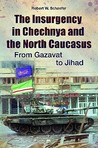
Review: The Insurgency in Chechnya and the North Caucasus: From Gazavat to Jihad

The Insurgency in Chechnya and the North Caucasus: From Gazavat to Jihad The Insurgency in Chechnya and the North Caucasus: From Gazavat to Jihad by Robert W. Schaefer
My rating: 5 of 5 stars

So I hear that this is one of the best books to read on the insurgency in Chechnya. Not having read anything else of this nature yet, I can attest that this is at least an incredibly informative primer on the subject, as well as an excellent case study of how NOT to handle an insurgency/conflict (for other examples of well known past and ongoing insurgency conflicts, see Afghanistan and Iraq/Syria).

Schaefer starts out by establishing and defining some of the key terms in the field of counterinsurgency- namely, insurgency and terrorism, which actually are not the same thing and draws attention to the unfortunately named “War on Terror” that the US espoused during the 2000’s. Insurgencies themselves are organized movements in rebellion against a constituted government or authority for fundamentally political or ideological reasons that rely on subversion and armed conflict to achieve their objectives. Schaefer goes on the define the four prerequisites needed for an insurgency conflict to happen: lack of government control, ideology, available leadership, and vulnerable population, likening them analogously to the components needed to make a campfire.

Conversely, when we talk of terrorism today, it’s important to note that while there are terrorist groups that exist for the sake of causing chaos/destruction, terrorism also exists as a means to an end for insurgencies. Insurgencies often use terrorist acts as a means for coercing a desired action out of their opposing government, by attacking the population that supports it, and otherwise demonstrating to their local population that the government is illegitimate, by creating the perception that it is unable to defend its own citizens.

Al Qaeda is better defined as an insurgency than a terrorist cell in this case, and Schaefer does a good job of explaining exactly why that is the case. And incidentally, insurgencies are much more difficult to deal with than regular nations/combatants in the conventional kinds of wars we’re familiar with, which is why they persist for so long: because defeating an insurgency requires both a long-term political solution as well as a military one. It is not sufficient to defeat an insurgency through military means; one needs to win the support of the local populace involved in the conflict through counter-ideological means, delegitimizing the insurgents themselves by eliminating the issues that would motivate the populace to support them in the first place. Otherwise, the insurgents can just go into hiding among the locals and continue to breed support from them and anger at the government until a later point when they have sufficient means to start attacking again.

The insurgency in Chechnya and the North Caucasus functions as a great case study for how to deal (and especially how not to deal) with such conflicts in general, as the conflict has effectively been ongoing for more than 300 years- morphing back and forth through different phases thanks to the generally ineffective methods that Russia has utilized and continues to rely on to this day. Schaefer spends much of the book outlining the history of the conflict, from the early days when the North Caucasus was besieged from all three directions (Ottomans + Persia + whoever controlled Russia) through the era of Yermolov and later the USSR, and finally the two Chechen Wars of the 90’s to the present shortly before the Sochi Winter Olympics. In the process he also provides much needed context on the Islamic nature of the conflict, noting that Islam has always been a factor since 300 years back, and clarifying the difference between the denominations/ideologies of Islam involved, Sufism and Salafism and Wahhabism and so on.

The most important content in the book is Schaefer’s detailed analysis of Russia’s counterinsurgency approach, and how counter it is in its priorities compared to established Western methodologies. I can only barely scratch the surface of the many issues that Schaefer addresses, but to put it one way, Russia’s problems are largely due to its lack of focus on the needs of the local Chechen populace, relying more on the support of the greater Russian population instead and otherwise ruling through coercion and fear. It has done very little to address the issues that have lead the local populations in the North Caucasus to see the insurgents as a legitimate cause in the first place, instead relying primarily on short-term solutions via the military/FSB and media censorship to control the public perception of the conflict. Because its standards are completely different from Western ones, Russia is able to judge its own methods as successful, even though the insurgents persist and still continue to carry out terrorist acts on the Russian population to this day, with no end in sight.

It is incredibly eye-opening to read about this conflict and see all of the ways it has gone wrong- and ironically, right in some cases. Russia’s methodology isn’t completely ineffective; it actually has made a number of gains in the past decade that Schaefer has also done a great job of presenting- but these gains are often only transient/short-term and not entirely sufficient for the kind of long-term recovery that the North Caucasus really needs given its lack of stability and poor infrastructure… not to mention the innumerable human rights abuses that have occurred in the area in the process. One can only hope that the situation may improve someday, but it’s hard to tell.

(Just to note: this book is rather expensive if you can't find it in a library. ~$50 on Amazon. Sigh.)

Wednesday, January 21, 2015

Review: The Lathe of Heaven

The Lathe of Heaven The Lathe of Heaven by Ursula K. Le Guin
My rating: 4 of 5 stars

One of the most [implicitly] terrifying and sinister scenarios I’ve ever seen in a sci-fi. What if your dreams really could rewrite the nature of reality? And what if someone tried to take advantage of your ability to do so? And I guess on a more abstract level, would anyone really have the right to harness such a power?

I’m almost reminded of Death Note except on a much grander scale: it’s one thing to supernaturally kill people off; it’s another to just rewrite them out of existence and everyone else’s memories altogether… and that’s just the tip of the iceberg here.

In this book, Le Guin manages to take a deceptively simple premise- the reality-altering power of dreams- and use it to explore a ton of other crazy philosophical ideas and possibilities from a wide range of other utopian/dystopian tropes. You wouldn’t even recognize it as a sci-fi until some of the later changes, some of which actually made me giddy for reasons I won’t spoil. I found myself wondering why there wasn’t already a movie of this, until I did a wiki search and saw that there’s already been two movie adaptations. I’m clearly behind the times.

The implications that Le Guin derives can feel a little heavy-handed at times, being not-so-subtly critical of utilitarianism and practically everything that the psychologist Haber does against George's conscience, and especially considering how conveniently inconvenient George’s power can be at the worst possible moment, but at the same time the concerns espoused are natural and valid ones. The novelty of the premise and the way the rest of the story developed were enough for me to get past that and just enjoy the ride, anyway... along with the interesting ideas.

Review: Nine Stories

Nine Stories Nine Stories by J.D. Salinger
My rating: 4 of 5 stars

Pretty straightforward to read, but NOT straightforward to understand, which I guess is how these kinds of short stories ought to be written to begin with. It felt more jarring here considering how often I would find myself puzzling over what just happened after finishing each story.

A lot of the stories aren’t very… happy when you think about them, which kind of draws on Salinger’s preoccupation with the experiences of soldiers post-war and the shallowness of traditional American values and society in the 40’s and 50’s. Incidentally, I couldn't help notice how children played a role in almost all of the stories. The first one, "A Perfect Day for Bananafish", encapsulates all of this pretty well, and especially after considering it within the context of the later works about Seymour Glass, or should I say "see more glass"… I just wanted to crawl into a bed somewhere and lie down for a while. Sigh.

Three of the stories here are actually Glass family stories, but you wouldn’t really know it unless you’d read Zooey or Raise High the Roofbeam, Carpenters first, because these stories function well independently already, and actually came out before those two, which were written at a point when Salinger was starting to consolidate the world of the Glasses (pun intended). The stories here are also very different in character than his later works, although you can start to see signs of his interest in spiritual topics like Zen philosophy by the time of the last story in this collection, “Teddy."

A worthwhile read overall, but expect to have to think a lot more than usual to really appreciate, because it’s really easy for these to go over your head and they go by fast.

Review: A Wrinkle in Time

A Wrinkle in Time A Wrinkle in Time by Madeleine L'Engle
My rating: 3 of 5 stars

I wonder what I’d have thought if I read this a decade and a half earlier. The idea of a tesseract isn’t exactly new to me anymore (and just look at popular films like Interstellar now), but for a kid I’d imagine it’d be eye-opening… as are a lot of other developments in this book. It’s a great read for anyone young and looking to expand their imagination.

That said:

- I found the characters not really all that believable, especially Calvin; at least you could get away with calling Meg and Charles precocious or something even though that’s still stretching things a bit.

- The explicit references to Christian ideas and quotes from the Bible felt out of place; they often got mentioned in passing without much in the way of reflection or commentary in the context of the actual story, so I found them hard to appreciate here even if I might actually agree with them. Just what are they doing here?

- The final resolution was a bit too predictable. I know it’s a children’s book, but still, given all of the other scientific and philosophical ideas going on, finishing it all with some (view spoiler) is really disappointing… although ironically fitting with the narrative’s tone.

Basically some fascinating ideas at play, but I’m not so sure about their execution or if I should be giving it all a pass given the target audience. But honestly, I think children’s lit can do (and has done) better.